
Khula in Pakistan Without Husband Consent (Latest Supreme Court Law 2026)
Introduction:
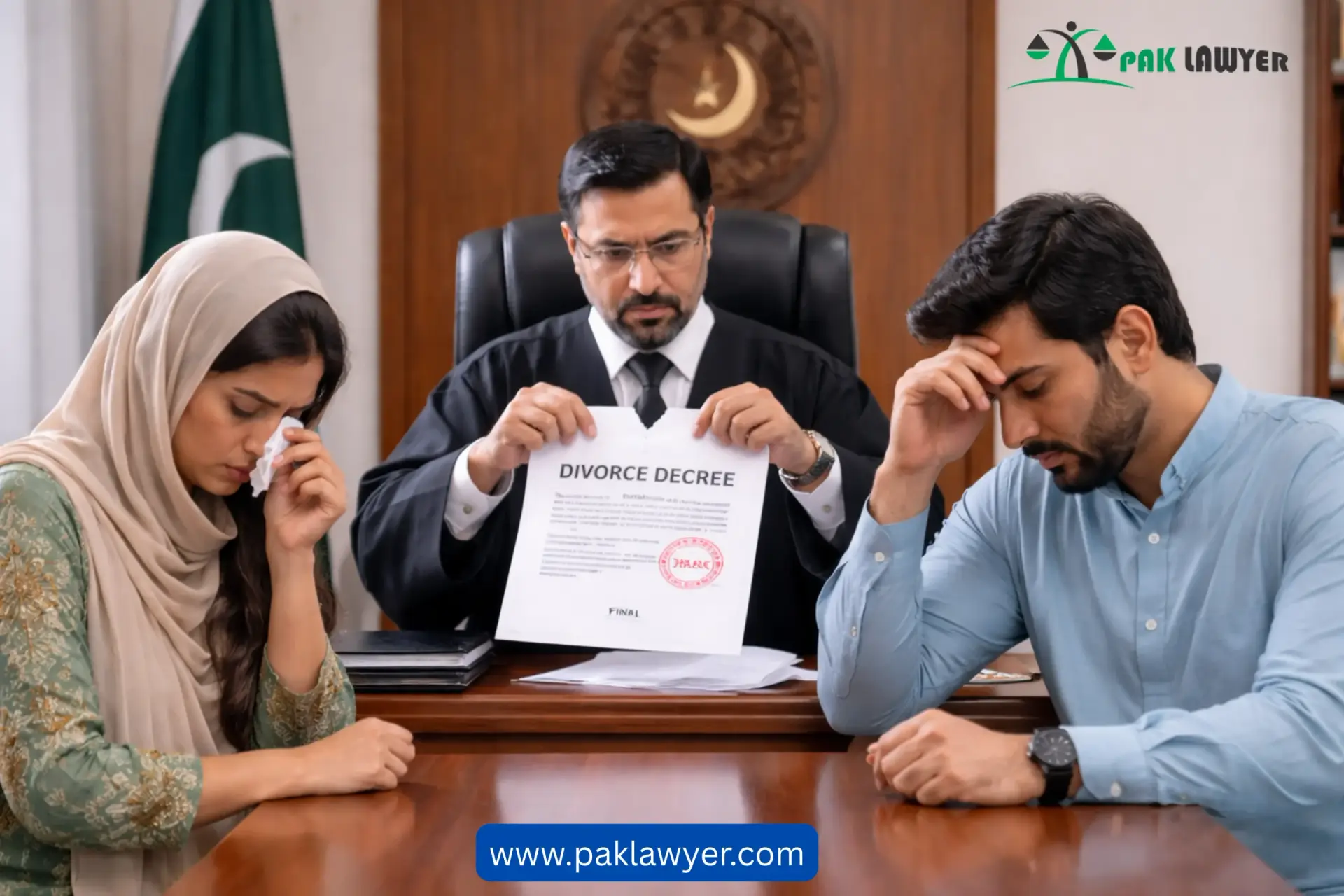
One of the most searched legal questions today is:
👉 “Khula in Pakistan without husband consent – is it possible?”
The answer under Pakistani law is clear:
⚖️ Yes — Khula in Pakistan can be granted without the husband’s consent.
However, the legal logic must be understood:
👉 A woman approaches the court only when the husband refuses to give divorce.
👉 Otherwise, there is no need to go to court.
This is why the law empowers a Family Court / Qazi to dissolve the marriage where reconciliation fails.
What is Khula in Pakistan Without Husband ?
Khula in Pakistan is a judicial dissolution of marriage initiated by a woman, governed by:
- Dissolution of Muslim Marriages Act, 1939 (DMMA)
- Family Courts Act, 1964
- Islamic principles of Khula
It applies where:
- Husband refuses to give Talaq
- Marriage becomes unbearable
- Wife cannot live within the limits prescribed by Islam
Core Legal Principle
✔ Husband agrees → No need for Khula
✔ Husband refuses → Wife files Khula
👉 Therefore:
Khula in Pakistan exists because the husband refuses divorce — otherwise, court intervention is not required.
👉 In such cases, the Judge (Qazi) pronounces dissolution of marriage (Khula decree).
Khula in Pakistan Without Husband
Latest Supreme Court Law & Judicial Developments (2023–2026)
1. Khula is an Independent Right (No Husband Consent Required)
Pakistani jurisprudence firmly establishes that:
⚖️ A woman can obtain Khula in Pakistan without husband’s consent
📌 Authority:
- Khurshid Bibi v. Baboo Muhammad Amin (PLD 1967 SC 97)
2. Khula Cannot Be Imposed by Court (PLD 2024 SC 645)
In Ibrahim Khan v. Mst. Saima Khan, the Supreme Court held:
- Khula cannot be imposed by the court without the wife’s consent
- Courts must respect the autonomy and free will of women
- Judicial language must avoid patriarchal stereotypes
- A wife may get Khula in Pakistan Without Husband’s consent
👉 This is a landmark 2024 precedent shaping family law jurisprudence.
3. Dissolution Claims Under DMMA Must Be Decided on Evidence
In Hamad Hassan v. Mst. Isma Bukhari, the Supreme Court clarified:
- Claims under DMMA 1939 must be assessed on balance of probabilities
- Maintenance is a statutory obligation of the husband during marriage
4. Courts Must Protect Women’s Dignity and Autonomy
The Supreme Court emphasized:
- Courts must avoid gender-biased reasoning
- Women’s dignity, autonomy, and lived realities (including domestic abuse) must be recognized
- Khula and dissolution are distinct legal remedies
Grounds for Dissolution of Marriage (Under DMMA 1939)
Under Section 2 of the Dissolution of Muslim Marriages Act 1939, a woman is entitled to dissolution on multiple grounds:
Key Grounds Include:
✔ Failure to Provide Maintenance
- Husband neglects or fails to maintain wife for 2 years
✔ Unauthorized Second Marriage
- Husband contracts another marriage in violation of:
- Muslim Family Laws Ordinance 1961
✔ Cruelty (Broad Interpretation)
Cruelty includes:
- Physical abuse or habitual assault
- Making wife’s life miserable (even without physical violence)
- Association with immoral conduct
- Forcing immoral life
- Disposing of wife’s property
- Preventing religious practice
- Unequal treatment among multiple wives
📌 Courts have expanded cruelty to include psychological and emotional abuse
Supporting Case Law on Grounds
- Muhammad Shariful Islam v. Suraya Begum
- Shahana Bibi v. Nadeem Shah
- Rabia Rasheed v. Faisal Mir
👉 These cases confirm that cruelty, non-maintenance, and inequitable treatment justify dissolution.
Important Legal Distinction (Very Critical)
⚖️ The Supreme Court clarified:
👉 Dissolution under DMMA ≠ Khula
- Dissolution → Based on legal grounds (fault-based)
- Khula → Based on wife’s unwillingness (no fault required)
📌 Courts cannot convert dissolution into Khula without wife’s consent
Implications of Latest Supreme Court Law
This evolving jurisprudence has major implications:
✔ Strengthens women’s constitutional rights
✔ Recognizes domestic abuse realities
✔ Rejects patriarchal judicial language
✔ Protects financial rights (dower & maintenance)
✔ Establishes clear legal standards for future cases
👉 These rulings promote fair and dignified treatment of women in marriage disputes.
Conclusion of Legal Position
The Supreme Court has firmly settled that:
- A woman has a statutory and constitutional right to seek dissolution
- Khula cannot be forced by the court
- Dissolution cannot be converted into Khula without consent
- Courts must ensure justice, dignity, and equality
📌 Therefore:
Where the husband refuses divorce, the court (Qazi) dissolves the marriage — either through Khula or statutory dissolution under DMMA 1939.
Procedure of Khula in Pakistan Without Husband: (Quick Overview)
- File suit in Family Court
- Notice issued to husband
- Reconciliation attempt
- Wife’s statement recorded
- Court grants decree
- Union Council issues divorce certificate (after 90 days)
for more details watch Khula in Pakistan – Complete Legal Procedure
Why Choose Pak-Lawyer Associates?
✔ Expertise in Khula & Dissolution cases
✔ Overseas client handling (UK, USA, Europe)
✔ Complete legal process (Court + UC + NADRA)
✔ 18+ years experience
📞 +92 321 4610092 | +44 7417 528692
🌐 www.paklawyer.com
