
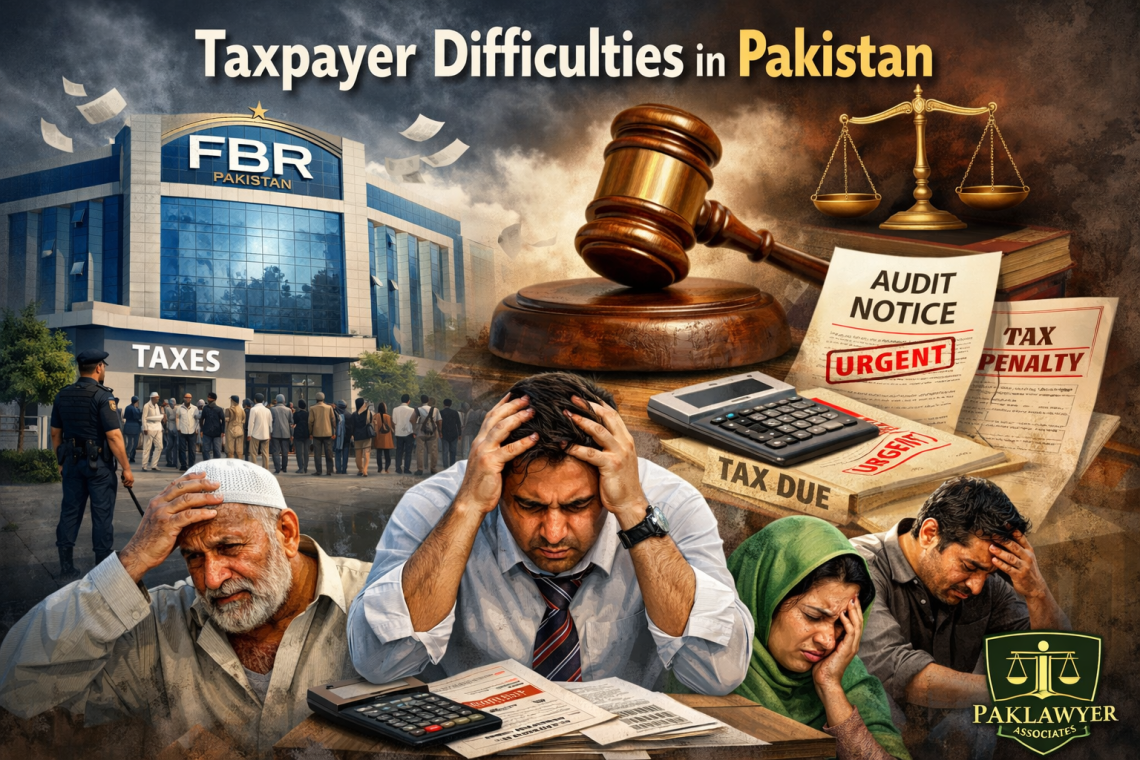
Taxpayer Difficulties in Pakistan (2026): Key Issues, FBR Challenges, and Practical Solutions
Taxation is supposed to be a structured and predictable system: taxpayers contribute, the state funds public services, and the economy becomes more stable. In Pakistan, however, many individuals, salaried persons, small businesses, and even established companies face persistent difficulties while dealing with the tax system. These difficulties are not just about paying taxes—they include compliance burdens, confusion over rules, digital and procedural issues, notice-and-audit pressure, refund delays, inconsistent enforcement, and uncertainty that discourages documentation and investment.
This article explains the major taxpayer difficulties in Pakistan, why they happen, and what practical steps taxpayers can take to reduce risk, improve compliance, and protect their rights.
1) Complex Tax Laws and Frequent Changes
One of the biggest issues is the complexity of Pakistan’s tax structure among Taxpayer Difficulties in Pakistan. Tax obligations arise under multiple regimes, including income tax, sales tax, federal excise, and provincial taxes. Each category carries its own rules, rates, exemptions, filing procedures, and documentation requirements.
Why this is difficult
- Tax rules change frequently through annual finance acts, SROs, notifications, and amendments.
- Many taxpayers—especially SMEs—lack access to reliable guidance.
- Even professionals face interpretation issues due to ambiguous drafting and overlapping provisions.
Real impact on taxpayers
- Mistakes in returns can trigger notices, penalties, or disallowances.
- Businesses remain unsure about correct classification of income or expenses.
- Compliance becomes expensive due to the need for consultants and legal support.
Result: A system that feels unpredictable and discourages voluntary compliance.
2) Confusing Withholding Tax System (Advance Tax Burden)
Pakistan heavily relies on withholding taxes collected through banks, utilities, mobile services, imports, contracts, rent, property transactions, vehicle registration, and more. For many taxpayers, this becomes a type of “advance tax” deducted at multiple points.
Key difficulties
- Multiple deductions on the same person’s transactions can create an excessive burden.
- Taxpayers often don’t understand whether a deduction is final tax or adjustable tax.
- Some people pay high withholding taxes yet remain technically “non-filers” due to return non-submission.
Common taxpayer complaints
- “My bank deducts tax, my mobile deducts tax, my bills deduct tax—why am I still getting problems?”
- “I paid advance tax but don’t know how to adjust it in the return.”
Result: People feel taxed without clarity, and businesses suffer cash-flow pressure.
3) Return Filing Difficulties and IRIS Portal Challenges
Pakistan’s shift toward digital filing is positive in theory, but many taxpayers struggle with the online process, especially on the FBR IRIS portal.
Problems taxpayers face
- Technical glitches, downtime, or slow portal performance.
- Confusing form fields, annexures, wealth statements, and reconciliation requirements.
- Difficulty in selecting the correct return type (individual/salaried/AOP/company).
- Errors due to “profile mismatch” or missing obligations.
Additional documentation pressure
For many taxpayers, filing isn’t just declaring income—it includes:
- Wealth statement and reconciliation of assets.
- Details of bank accounts, property, vehicles, investments.
- Expense and personal spending disclosures.
Result: Honest taxpayers feel overwhelmed, and many delay filing until deadlines, increasing errors and stress.
4) Lack of Tax Awareness and Guidance for Ordinary Taxpayers
A major structural problem is low tax literacy. Many people do not understand:
- Who must file a return vs. who must pay tax.
- Difference between filer and non-filer status and its consequences.
- How to document income sources properly (salary, business, freelancing, rent, property, agriculture, foreign income).
Most affected groups
- Salaried individuals filing for the first time.
- Freelancers/IT professionals receiving foreign remittances.
- Small traders who mix personal and business funds.
- Women managing inheritance, rental income, or investments.
Result: People avoid the system out of fear, confusion, or mistrust.
5) Notices from FBR, Audit Pressure, and Fear of Harassment
Many taxpayers cite notices and potential audit as the most stressful part of dealing with the tax authorities.
Why it becomes difficult
- Notices can be issued for mismatches, “risk profiling,” non-compliance, or third-party data discrepancies.
- Taxpayers often receive notices without fully understanding the alleged issue.
- Responses require documentation, legal drafting, and technical explanations.
Common audit-related problems
- Broad or unclear information demands.
- Short deadlines for response.
- Inconsistent treatment across cases.
- Taxpayers feel compelled to “settle” to avoid prolonged proceedings.
Result: Fear reduces voluntary compliance and increases dependency on intermediaries.
6) Refund Delays and Adjustment Disputes
Refunds—especially sales tax refunds, excess withholding adjustments, or input claims—are a long-standing pain point.
Typical taxpayer difficulties
- Refund processing takes too long due to verification cycles and risk checks.
- Taxpayers face repeated queries and objections.
- Claims may be withheld due to system flags, “ATL status,” or incomplete documentation.
Business impact
- Working capital gets stuck.
- Exporters and manufacturers face liquidity issues.
- SMEs cannot afford lengthy refund disputes.
Result: Refund delay becomes a hidden cost of doing business in Pakistan.
7) Documentation Burden and Cash Economy Reality
Pakistan’s economy still has a large cash component. When the tax system pushes documentation without creating smooth compliance pathways, taxpayers struggle to align their real-life transactions with formal records.
Common documentation gaps
- Businesses don’t maintain proper invoices or stock records.
- Personal expenses and business expenses get mixed.
- Property transactions often involve under-declaration and informal payments.
- Many people lack verifiable proof of income sources.
Result: Tax returns and wealth statements become difficult to justify if records are weak.
8) Filer vs. Non-Filer Consequences and Social Friction
The filer/non-filer distinction affects:
- Banking transactions
- Property buying/selling
- Vehicle registration
- Withholding tax rates on multiple services
Key taxpayer complaint
Many people are taxed via withholding but still treated as non-filers if they don’t submit returns. This causes:
- Higher tax deductions
- Restrictions and friction in routine transactions
- Public confusion and resentment
Result: A compliance system that feels punitive rather than facilitative.
9) Cost of Compliance for SMEs and Professionals
For small businesses, compliance cost is often too high relative to earnings.
What increases the cost?
- Multiple registrations and filings (income tax, sales tax, PRA/SRB/KPRA/BRA, etc.).
- Bookkeeping and invoicing requirements.
- Professional fees (consultants, accountants, lawyers).
- Penalties for late filing, even where tax payable is minimal.
Result: Many SMEs remain informal, reducing the overall tax base.
10) Inconsistent Enforcement and Perception of Unfairness
A major psychological barrier is the belief that taxation is unequal—that compliant taxpayers bear more burden than those who remain outside the net.
Why it matters
- People comply more when they believe the system is fair.
- Inconsistent enforcement encourages avoidance.
- Trust in institutions falls when taxpayers see selective accountability.
Result: Voluntary compliance remains low, even among capable taxpayers.
Practical Solutions: What Taxpayers Can Do Right Now
Even with systemic issues, taxpayers can reduce risk and make compliance easier by adopting practical habits:
1) Maintain Basic Documentation (Even if Small)
- Keep bank statements, salary slips, invoices, and receipts.
- Separate personal and business transactions where possible.
- Maintain a simple monthly income/expense record (Excel works).
2) File Returns Consistently (Don’t Break the Chain)
Regular filing helps maintain active status and reduces “profile risks.”
3) Reconcile Withholding Taxes
- Collect withholding certificates where available.
- Track deductions by banks/clients/utilities.
- Ensure adjustments are correctly entered in the return.
4) Respond to Notices Professionally and On Time
- Don’t ignore notices.
- Prepare a structured reply with evidence.
- If technical, consult a tax professional to avoid admissions or mistakes.
5) Use a Compliance Calendar
- Mark deadlines for return filing, withholding statements, sales tax returns (if registered).
- Avoid last-day filing to reduce portal stress and errors.
Policy-Level Improvements Pakistan Needs (Long-Term Fixes)
For real reform, taxpayers benefit most from structural measures such as:
- Simplification of return forms for small taxpayers and salaried individuals.
- Reduction and rationalization of withholding taxes.
- Faster, transparent refund system with clear timelines.
- Strong taxpayer facilitation centers with accountable guidance.
- Digitization with reliability: stable portal, clear error messages, guided filing.
- Consistent enforcement to broaden the tax base fairly.
Frequently Asked Questions (FAQ)
1) Do I have to file a tax return if my employer already deducts tax?
In many cases, yes—because return filing is separate from deduction. Filing keeps you compliant, helps you stay on the Active Taxpayer List, and allows adjustments/refunds where applicable.
2) Why am I taxed so much through withholding taxes?
Pakistan uses withholding taxes widely to collect revenue in advance. Many deductions are adjustable but must be claimed properly in your return.
3) What should I do if I receive an FBR notice?
Read it carefully, note deadlines, gather supporting documents (income proof,
utine. Compliance becomes easier when records are maintained throughout the year. Contact an expert tax Lawyer.
Conclusion
Taxpayer difficulties in Pakistan are real and multi-layered: complex laws, withholding burdens, portal challenges, notices and audits, refund delays, documentation gaps, and perceptions of unfairness. While systemic reforms are essential, taxpayers can still protect themselves by keeping basic records, filing consistently, reconciling withholding taxes, and responding to notices properly.
Write a comment:
You must be logged in to post a comment.

