


Court Marriage Procedure, Requirements, and Essential Guide;
The court marriage procedure in Pakistan legally recognizes a process that enables individuals to marry without requiring familial or societal approval. This method of solemnization safeguards the parties’ marital rights under Pakistan’s legal framework. Pak-Lawyer Associates provides comprehensive legal assistance, ensuring compliance with statutory obligations and procedural requirements. This article offers a detailed legal overview of the court marriage procedure and addresses key questions that arise in the context of such unions.

What is Court Marriage?
Court marriage refers to the solemnization of a marriage under the supervision of the law through a licensed Nikah Registrar, Union Council, or other authorized officer. It provides legal protection to individuals exercising their right to marry freely, especially when their family does not give consent or when the marriage involves partners of different faiths. The following legal instruments govern court marriages:
- Muslim Family Laws Ordinance, 1961
- Marriage Act, 1872 (applicable to non-Muslim citizens)
Both Pakistani nationals and foreign individuals can take advantage of the court marriage process in Pakistan.
Court Marriage Procedure in Pakistan:
The process of court marriage is straightforward and efficient. The following steps outline the procedure:
- Verification of Eligibility:
- The groom and bride must meet the legal age requirements (18 years for males and 16 years for females; however, in Sindh, both must be 18).
- Both individuals must provide free consent without any duress.
- Submission of Documents:
- Valid CNICs or passports of the parties.
- Affidavit of free will from the bride.
- Passport-sized photographs of bride
- CNICs of two adult witnesses.
- Visa and entry stamp on Passport (in case of foreigner)
- Nikah Ceremony:
- A licensed Nikah Registrar performs the Nikah and records the marriage details in the Nikah Nama (marriage certificate).
- Court Attestation (if required):
- If the parties require legal protection, the marriage can be attested before a Judicial Magistrate or Family Court.
- Registration of Marriage:
- The authorities regard the Nikah Nama as a public document and register it with the Union Council in the jurisdiction where the marriage is solemnized, making it legally binding.
- NADRA’s computerized marriage certificate is issued within 3 to 5 days.
Document Requirements for Court Marriage:
The following documents are required for court marriage in Pakistan:
- Valid CNICs or passports of the parties.
- Affidavit of free will from the bride.
- Two passport-sized photographs of Bride.
- CNICs of two witnesses to the marriage.
- If divorced or widowed, divorce certificate or death certificate of the previous spouse.
- For foreign nationals:
- Valid passport, visa, and entry stamp.
- No Objection Certificate (NOC) from the foreigner’s embassy, if applicable.
Legal Fees for Court Marriage in Pakistan:
The legal fee for court marriage services varies based on the complexity of the case. Pak-Lawyer Associates offers legal packages starting from PKR 30,000 to 50,000, covering documentation, legal consultancy, and registration. Additional fees may apply if the couple requires protection orders from court or MOFA/ apostille , Embassy attestations.
Is a Statement Before the Court Mandatory?
In general, a formal statement before the court is not mandatory for court marriage. However, if there are concerns about opposition from family members or potential threats, the couple can provide a joint statement to a Magistrate or Family Court confirming their voluntary consent.
Court Protection Orders: Process and Requirements:
A protection order offers legal safety to couples facing interference or threats from family members. The following documents are required to obtain a court protection order:
- A copy of the Nikah Nama.
- A joint affidavit affirming that the marriage was entered into with mutual consent.
- An application for protection filed with the Session Court or High Court.
Pak-Lawyer Associates provides assistance in filing protection orders to safeguard the interests of our clients.
How Do Court Marriage Documents Differ from Regular Marriage Documents?
Both court marriages and traditional marriages result in the issuance of a Nikah Nama. However, court marriages require additional legal formalities, such as:
- A free will affidavit from the bride.
- In some cases, attestation by a Judicial Magistrate or Justice of Peace.
- If you request a protection order, the court may issue additional legal notices to family members.
Can Foreign Nationals Contract Court Marriage in Pakistan?
Yes, foreign nationals can contract court marriage in Pakistan, provided they meet all legal requirements. Pak-Lawyer Associates assists foreign nationals by:
- Preparing required passports, visas, and entry stamps.
- Obtaining a NOC from the relevant embassy (if required).
- Preparing the necessary affidavits.
Can a Foreigner Marry a Pakistani National?
Yes, a foreign national can legally marry a Pakistani citizen through court marriage. The process follows similar requirements, with the addition of any embassy-specific documentation. Pak-Lawyer Associates provides expert legal support to ensure a smooth marriage process for international couples.
Can a Muslim Man Marry a Non-Muslim Woman?
Under Islamic law, a Muslim man may marry a Christian or Jewish woman without requiring her to convert to Islam. However, if the woman belongs to another faith, she may need to convert to Islam. Pak-Lawyer Associates offers legal guidance on such matters to ensure compliance with Sharia law and civil laws.
What is the Legal Age for Court Marriage?
The legal age for marriage in Pakistan is:
- 18 years for males.
- 16 years for females (though in Sindh, the minimum age is 18 for both).
Marriages involving minors are prohibited and can result in criminal prosecution.
What is the Free Will Affidavit?
The free will affidavit is a formal declaration from the bride, affirming that she is entering into the marriage without any coercion or pressure. This affidavit plays a crucial role in court marriages, especially when seeking legal protection.
Where are Court Marriages Conducted?
Court marriages can be conducted at:
- Pak-Lawyer Associates’ offices.
- Union Council offices.
- Chosen Hotel by parties
- Historical Places like Badshahi Mosque etc for foreigner spouse
- Family Courts or Magistrate’s Courts (if formal attestation is required).
Pak-Lawyer Associates ensures that all services—documentation, registration, and Nikah—are provided under one roof, maintaining privacy and convenience for our clients.
How to Find a Court Marriage Office Near Me?
Pak-Lawyer Associates provides court marriage services in major cities, including:
- Lahore
- Islamabad
- Gujranwala
- Rawalpindi
Simply search for “Pak-Lawyer Associates” on Google to find our nearest office.
Time Required for Court Marriage Procedure:
Typically, you can complete a court marriage procedure within one hour if booked in advance. The Union Council registers the marriage within 24 hours, and NADRA issues the computerized marriage certificate within 3 to 5 days.
Conclusion:
Couples in Pakistan can legally solemnize their marriage through court marriage, allowing them to do so without interference. Whether you are a Pakistani citizen or a foreigner, Pak-Lawyer Associates offers hassle-free services under one roof—from legal documentation to registration and protection orders.

To learn more or book a consultation, visit www.paklawyer.com
or call @ +92 321 4610092 today. for more info yuo may also visit ?

Child Adoption Procedure
1. Submission of the application to the Presiding Officer, Child Protection Court, Lahore, along with all required documents.
2. Preparation of a Socio-Economic Report for the applicant family by a designated Child Protection Officer.
3. Scrutiny of applications conducted by the Bureau’s scrutinizing committee, involving interviews with the applicant families.
4. Submission of the suitability report to the Child Protection Court to assist in the court’s decision-making process.
5. The Child Protection Court issues an order entrusting custody based on the submitted reports and assessments.
Documents Required by the Child Protection Court, Lahore, Pakistan, Along with the Application for Custody under Section 28 of the Punjab Destitute & Neglected Children Act, 2007:
1. Copies of National Identity Cards of the applicant-couple.
2. Copies of Foreign Identity cards/Resident permits of the applicant-couple where applicable.
3. Copy of Nikah Nama/Marriage Certificate of the applicant-couple.
4. Latest photographs of both husband and wife (Passport Size).
5. Copy of death certificate of the spouse in case of widowhood or widowerhood.
6. Copy of divorce papers in case of divorce.
7. Copies of Passports of the applicant-couple where applicable.
8. Copies of Foreign Passports of the applicant-couple or any spouses with dual nationality.
9. Family Registration Certificate (F.R.C) issued by “NADRA” for the applicant-couple.
10. Copies of Certificates/Degrees indicating the education of the applicant-couple.
11. Copies of Service Certificate/Service Identity Card/Salary Slip of the applicant-couple where applicable.
12. Copies of documents of title for immovable property owned by the applicant-couple (e.g., houses, shops, plots, agricultural land).
13. Copies of documents of title for movable property owned by the applicant-couple (e.g., cars, tractors, motorcycles).
14. Bank statement for the last six months from the applicant-couple’s bank account, if available.
15. Copy of National Tax No. Certificate and the last submitted income tax return, if available.
Additional Requirements:
16. Authentic medical report from a concerned consultant doctor, demonstrating the inability to conceive or fitness for reproduction due to a medical problem.
17. Affidavit on a Rs. 100/- stamp paper by the applicant-couple stating they are issueless and have no hope of having children of their own.
18. Affidavit on a Rs. 100/- stamp paper by the applicant-couple affirming their Islamic faith and belief in the finality of Prophet Muhammad’s (Peace Be Upon Him) prophethood.
19. No Criminal Record Certificate from the concerned SHO (Police Station).
20. Affidavit on a Rs. 100/- stamp paper by the applicant-couple assuring the child’s good livelihood and upbringing.
21. Affidavit on a Rs. 100/- stamp paper by local notables regarding the societal behavior of the applicant-couple.
22. All documents must be attested.
Note:
1. All documents must be in Urdu or English. If in any other language, provide an authentic translation in Urdu or English.
2. If custody is granted for adoption, the foster parents must invest Rs. 10,00,000/- (one million) in the adopted child’s name, following the court’s permission, through the purchase of Defense/National Savings Certificates or in any other approved form.
For more information, please visit our page or watch our YouTube channel:
Adoption in Pakistan | Adopting a child | Adoption laws in Pakistan.

Sex Workers in Pakistan: A Legal and Social Perspective
Sex work in Pakistan remains illegal and socially condemned. However, the reality of this profession reveals a stark contradiction. During the day, sex workers face severe social stigma, ostracism, and moral condemnation. They often live in secrecy to avoid public shaming. Yet, during the night, many of the same individuals who publicly shun them seek their services in private. This duality reflects deeper societal hypocrisy—where sex workers are desired in secret but scorned in public.
Legal Framework and Recent Amendments
The *Hudood Ordinance* of 1979 criminalized adultery and fornication, leading to increased crackdowns on sex workers. The Protection of Women (Criminal Law Amendment) Act, 2006 introduced important distinctions between *zina* (adultery) and non-consensual acts like rape. Specifically, sections 376, 496-B, and 496-C of the Pakistan Penal Code (PPC) deal with crimes like rape and fornication, with Section 496-B criminalizing consensual sexual relations outside of marriage, punishable by up to five years in prison.
The Federal Shariat Court, in “Shariat Petition 12-I of 2020”, upheld these provisions as consistent with Islamic principles, reiterating the distinction between *zina* punishable by *hadd* and lesser punishments under *tazir*. The court emphasized that if the strict evidentiary requirements for *zina* (such as four male eyewitnesses) are not met, the state can still impose discretionary punishments for fornication.
Recent Legal Developments
One of the most significant recent developments in Pakistan’s legal landscape regarding women’s rights is “Justice Ayesha Malik’s” groundbreaking ruling in 2021, which banned the *two-finger test* used to examine victims of sexual assault. The court ruled that this practice was unscientific, degrading, and a violation of women’s fundamental rights to dignity and privacy. Justice Malik emphasized that the test did not provide any evidence regarding sexual assault and should no longer be part of medical examinations for rape victims. This judgment reflects the judiciary’s growing commitment to protecting women’s rights and bodily autonomy, setting a crucial precedent for future cases.
This ruling is especially significant in a society where sex wo rkers are already marginalized. The elimination of the two-finger test helps to protect the dignity of women accused of engaging in sex work or those reporting sexual violence. It removes a tool of moral judgment that has been historically used to stigmatize women based on their perceived “virginity” or sexual history.
Additionally, a landmark ruling in 2024 marked Pakistan’s first conviction for marital rape, signaling a further shift in legal recognition of women’s rights to bodily autonomy within intimate relationships. Although the conviction focused on sodomy, it set a precedent for addressing non-consensual sexual acts within marriage.
Social Challenges and Hypocrisy:
Sex workers live under extreme social duress, often forced into the profession by poverty, trafficking, or coercion. By day, they face public condemnation, but at night, they serve many of the same individuals who publicly reject them. This stark contradiction exemplifies the deep-rooted societal hypocrisy regarding sex and morality in Pakistan. While sex workers are scorned, they remain in demand, which leaves them vulnerable to abuse, exploitation, and harassment—both from law enforcement and clients.
Due to the stigma surrounding their profession, sex workers have limited access to social services, healthcare, or alternative employment opportunities. Their lives are characterized by secrecy, fear of legal action, and a constant battle for survival. This social disdain makes it difficult for them to escape the cycle of poverty and marginalization.
Key Legal Provisions: Section 203-C of Cr.PC:
The procedural framework governing fornication complaints is outlined in *S.203-C of the Code of Criminal Procedure (CrPC)*, which provides several protections:
– A formal complaint must be lodged in a competent court.
– The complaint must be supported by the sworn testimony of two eyewitnesses.
– If the presiding officer finds sufficient evidence, only then can the accused be summoned.
If these requirements are not met, the proceedings related to Section 496-B PPC are invalid. This provision prevents the misuse of fornication accusations and protects individuals from false or frivolous charges.
Court Judgments and Privacy Rights:
The Superior Courts of Pakistan have repeatedly emphasized the right to privacy under Article 14 of the Constitution. Law enforcement cannot raid private residences or make arrests based solely on accusations of immoral activity unless there is concrete evidence. The courts have reinforced that moral policing must not infringe upon individual privacy unless a clear legal offense is proven. The *Shariat Petition 12-I of 2020* decision further underscores that *zina* and fornication accusations must meet strict evidentiary standards.
Seeking Legal Protection:
For sex workers facing legal troubles or wrongful detentions, seeking legal protection is essential. Lawyers can help protect their rights and ensure due process under the law. Sex workers in need of legal assistance can contact firms like *Pak-Lawyer Associates* for representation and legal advice in cases of wrongful detention or mistreatment. Legal advocacy is crucial for challenging the societal stigma and ensuring that their rights are upheld.
Conclusion:
While sex work remains illegal in Pakistan, societal attitudes toward sex workers expose a double standard where they are condemned publicly but sought privately. Legal reforms, such as *S.203-C CrPC* and recent judgments like the *ban on the two-finger test*, provide procedural protections and signal a shift toward recognizing women’s rights. Despite these advancements, the societal stigma surrounding sex work continues to marginalize sex workers, leaving them vulnerable to exploitation and abuse while navigating a legal system that criminalizes their profession. The ongoing legal changes and the establishment of legal aid resources offer hope for better protection and support for individuals involved in sex work.

Women’s Safety from Cyber Crimes in Pakistan :

In Pakistan, many women face growing risks of cybercrimes such as online harassment, blackmail, and data theft. Social media platforms frequently become avenues for the exploitation of personal information. According to reports from the FIA Cyber Crime Wing, there has been an increase in such incidents, with a significant number of victims being women.
Protecting Yourself:
Digital safety begins with awareness. Women can protect their online presence by using privacy settings, being cautious with suspicious messages, and knowing how to report abuse to the FIA. Even if some girls keep nude photos or sensitive videos in private drafts and do not post them publicly, there is still a risk that hackers or their acquaintances might leak these materials.
Occasionally, individuals may store private chats, nude photographs, or sensitive videos on their mobile devices. It is crucial to remember that such data could be lost or exposed. Furthermore, it is imperative to ensure that you properly format the device’s disk before selling or disposing of your phone. Failure to do so may result in unintended disclosure of sensitive information.
Mastery of basic cyber hygiene and awareness of your rights are essential for staying safe online.
CYBER CRIME ONLINE COMPLAINT:
A woman in Pakistan is facing cyber harassment or any other cybercrime, she can file an online complaint through the FIA Cyber Crime Wing’s website. To file an online cybercrime complaint in Pakistan, visit the FIA Cyber Crime Wing’s official complaint portal . You need to provide personal details, describe the incident, and attach evidence such as screenshots or URLs. After submission, the FIA will review the complaint and begin the investigation process. This portal streamlines the process for victims of cyber harassment, identity theft, or other online crimes to seek legal action.
How to File an Online Complaint with the FIA Cybercrime Wing.?
To ensure women’s safety from cyber crimes in Pakistan, always follow these steps:
1. Visit the Website : Go to the official website of the Federal Investigation Agency (FIA) Cybercrime Wing.
2. Navigate to the Complaint Section: Look for the ‘Cybercrime Complaint‘ or ‘Online Complaint’ section on the website.
3. Fill Out the Complaint Form: Complete the online complaint form with accurate details. Provide necessary information such as personal details, a description of the incident, and any relevant evidence.
4. Submit Supporting Documents: Upload any supporting documents or evidence that substantiate your complaint.
5. Review and Submit: Double-check the information you’ve entered, then submit your complaint.
6. Receive Confirmation: After submission, you should receive a confirmation receipt or reference number for your complaint. Keep this for future reference.
7. Follow Up: If needed, follow up with the FIA Cybercrime Wing using the reference number to track the status of your complaint.
Make sure to provide as much detail as possible to help the authorities investigate your case effectively.
How to Get Help:
Pak-Lawyer Associates stands with women facing these threats by offering free legal assistance. If you or someone you know is being harassed online, you can approach their team to get help with filing complaints and navigating the legal process under PECA 2016.
Why Pak-Lawyer Associates:
Pak-Lawyer Associates is committed to ensure women’s safety from cyber crimes in Pakistan and ensuring that women have access to legal protection. Their team not only helps women file complaints with the FIA but also offers emotional support and expert legal guidance.
For those struggling with cyber harassment, getting timely legal aid can make a world of difference.
For more support, visit Pak-Lawyer Associates.

Power of the Specific Relief Act in Pakistan
Empowering Litigants Through Legal Redress:
Within the intricate landscape of Pakistani litigation, the Specific Relief Act stands as a beacon of hope for those seeking remedies for breaches of contract, property disputes, and assorted civil wrongs. Enacted to furnish tailored reliefs for specific civil matters, it serves as a pivotal instrument in ensuring the administration of justice.
Let’s delve into the myriad benefits conferred by the Specific Relief Act upon litigants in Pakistan’s civil courts:
- Specific Performance: At its core, this act champions the enforcement of specific performance. Rather than mere monetary compensation, it empowers courts to compel parties to fulfill their contractual obligations, particularly beneficial when dealing with unique or rare contract objects.
- Prevention of Multiplicity of Proceedings: By enabling the consolidation of various reliefs stemming from the same cause of action into a single suit, the Act circumvents the need for multiple litigations, thereby saving time and resources for all parties involved.
- Injunctions: A pivotal provision of the Act, injunctions (Stay orders) —be they temporary or permanent—serve to halt infringements of rights and prevent wrongful acts, offering indispensable relief in situations requiring immediate action to avert irreparable losses.
- Effective Remedy for Land Disputes: The Act provides an effective remedy for land disputes, aiding in the recovery of possession of immovable property and enabling individuals and organizations to establish their rightful title over land.
- Flexible Remedies: Courts can adjust relief accordingly in each case through provisions such as rectification and cancellation of instruments, as well as specific restitution of property, ensuring flexible remedies tailored to the unique circumstances.
- Enforcement of Special Rights: Beyond monetary damages, the Act enables the enforcement of special rights pertaining to trusts, gifts, and contracts for personal service, recognizing the inadequacy of monetary compensation alone in certain scenarios.
- Certainty and Predictability: By establishing a clear legal framework for the enforcement of rights and obligations, the Act fosters certainty and predictability in legal proceedings, allowing litigants to seek relief based on settled principles and procedures.
- Equitable Relief: Upholding principles of fairness and justice, the Act facilitates equitable relief, ensuring that remedies dispensed by courts are commensurate with the circumstances of each case, thereby promoting fairness in dispute resolution.
Landmark judgments of Pakistan’s superior courts consistently interpret and apply the provisions of the Specific Relief Act to provide relief to litigants, underscoring that these benefits are not merely theoretical.
Land Mark Judgments/ Citations of Superior Court of Pakistan :
For instance, cases like Government of Punjab v. Nawaz Sharif and Muhammad Akram v. Mian Bashir Ahmad exemplify instances where specific performance was endorsed in contracts related to land sale or lease, acknowledging the unique nature of such agreements. Similarly, in Nishat Mills Ltd. v. Karachi Development Authority, an injunction was granted to prevent irreparable harm to the plaintiff’s property, underscoring the Act’s efficacy in safeguarding rights.
Through cases like Fazal Din v. Shaukat Ali, Muhammad Munir v. Pakistan, Naeem Khan v. Sindh High Court, Ahmed Textile Mills v. Government Punjab, and Habib Bank Ltd. v. Sindh Development Authority, the diverse applications of the Specific Relief Act in delivering relief across various contexts further underscore its significance in the Pakistani legal landscape.
For further insights, explore the Specific Relief Act and relevant court rulings.

The rights of an accused person upon arrest in Pakistan.
In the recent judgment of the Lahore High Court, Lahore, titled Writ Petition No. 8709/2024 (Muhammad Imran vs. Inspector General of Police, etc.), the court reaffirmed several fundamental rights and issued strict instructions to police officials for their compliance.
1. Prompt Notification of Arrest Reasons:

The detaining authority must promptly inform the accused of the reasons for arrest, adhering to principles of due process and transparency to ensure understanding of allegations and enable a proper defense, preventing arbitrary arrest and safeguarding liberty and the rule of law.
2. Right to Contact Family:
After arrest, the accused person should have the right to contact their family, enabling them to seek support and advocacy, especially in high-risk situations, which serves as a crucial safeguard against arbitrary arrest.
3. Immediate Access to Legal Advice:
After arrest, the accused retains an immediate right to legal advice, and police authorities must facilitate contact with a lawyer, recognizing its fundamental importance in upholding integrity and fairness within the legal system.
4. Dispatch of Arrest Report and Magistrate Authorisation:
To prevent illegal detention, authorities must dispatch the arrest report according to legal procedures. If the detention extends beyond twenty-four hours, they must bring the accused before a Magistrate for authorization under the law.
5. Safeguarding Fundamental Rights by Magistrates:
Upon presentation before the Magistrate, it becomes their duty to safeguard the accused’s fundamental rights, essential for judicial integrity and fairness.
6. Prohibition of Torture:
The Police officials must refrain from subjecting the accused to torture for evidence or confession, as the Constitution prohibits such actions, ensuring fairness, equality, and dignity in treatment.
7. Documentation and Compliance by Police Officials:
Police officials must ensure the safeguarding of the rights of the accused in custody and accurately document these efforts in police records to demonstrate compliance with legal requirements.
Land Mark Judgment of Court :
This Judgment serves as a sincere reminder to both magistrates and police authorities of the significant responsibility they bear in safeguarding the fundamental rights of individuals accused and held in custody. Regardless of the charges they face, every accused person is entitled to fundamental rights that must be upheld and respected throughout the entirety of the criminal justice system.

Introduction:
A Schengen Visa opens the door to exploring the vibrant cultures and picturesque landscapes of the Schengen Area. Comprising numerous European countries with eliminated internal border controls, this short-stay visa allows visitors to enjoy a 90-day stay within a 180-day period. As you embark on this exciting journey, it’s crucial to be well-prepared with the necessary documents. In this guide, we’ll walk you through the key requirements for a Schengen Visa application.
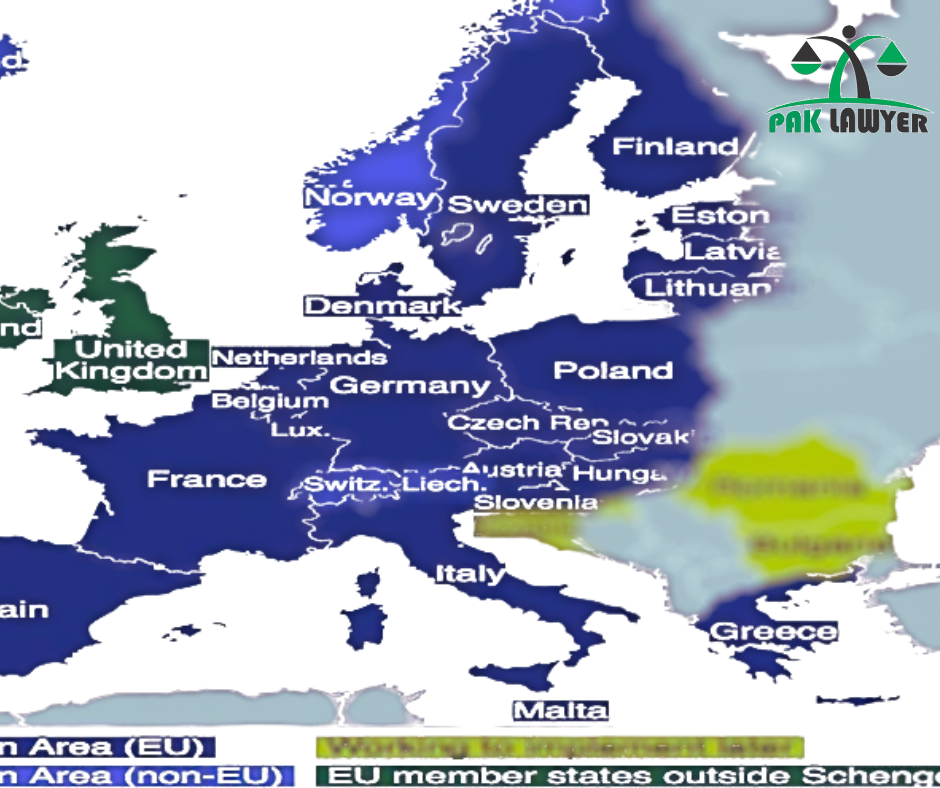
Schengen Visa Requirements:
1. Fully Completed Application Form:
Begin your journey by filling out the Schengen Visa application form. Ensure all sections are completed accurately and sign the form before submission.
2. Passport and Photographs:
Submit a valid passport with more than three months’ validity, and make sure it has at least two blank pages for visa affixing. Include two recent passport-sized photographs meeting Schengen visa specifications.
3. Itinerary and Accommodation:
Provide a detailed itinerary of your trip, including round-trip reservations or flight details. For accommodation, a confirmed hotel reservation is required. If staying with relatives or friends, proof of accommodation and their details may be requested.
4. Visa Application Fee:
Include proof of payment for the Schengen Visa application fee, which is €80 for adults and €40 for children aged 6 to 12.
5. Travel and Medical Insurance:
Demonstrate proof of travel and medical insurance with coverage of up to €30,000 for potential medical expenses during your stay.
6. Financial Means:
Show evidence of financial means through a bank account statement (no older than three months) indicating sufficient funds to cover your stay. If sponsored, include a sponsorship letter and the sponsor’s recent bank statement.
Additional Requirements:
1. Proof of Employment:
If employed, provide a letter from your company stating your monthly wages, job continuity after leave, and the duration of your vacation.
2. No Objection Letter:
Include a no objection letter if required by the authorities.
3. Student Status:
For students, submit a letter from your school/college/university confirming your attendance.
Special Cases:
1. Visiting Family or Friends:
Include an invitation letter from your host, along with proof of your relationship and details of your stay.
2. Business Travel:
If traveling for business, present a letter from your employer outlining the purpose of your visit. Invitations from a Schengen-based company should include the event details.
3. Studying in Europe:
Provide an acceptance letter from the institution you plan to attend, specifying details of your stay.
4. Event Attendance:
For event participation, submit an invitation letter, event details, and proof of the necessity of your presence.
5. Retirement:
If retired, present six months of pension statements as proof of financial capability.
Minors’ Visa Requirements:
For minors, additional documents include the child’s birth certificate, signed applications from both parents, family court orders (if applicable), certified copies of parents’ passports, and a notarized letter of parental authorization if the child is traveling alone.
Conclusion:
Understanding the specific requirements for your Schengen Visa application is crucial for a smooth and successful process. Ensure that you have all necessary documents in order to embark on your European adventure with confidence.
For more information, please, Ask your question here.

 Table of Contents:
Key Responsibilities of an FDA Lawyer.
Understanding Complex Regulations:
FDA regulations are intricate and subject to frequent changes. An experienced lawyer possesses the knowledge to interpret and apply these regulations effectively.
Navigating Approval Processes:
From 510(k) submissions to Pre-market Approval (PMA) applications, an FDA lawyer guides manufacturers through the approval processes, ensuring compliance at every step.
Ensuring Compliance with Quality Systems
Quality is non-negotiable in the medical device industry. An FDA lawyer aids in developing and maintaining robust quality systems to meet regulatory standards.
Expertise in Classification and Labeling
Importance of Correct Device Classification
Correctly classifying a medical device is fundamental. An experienced lawyer ensures accurate classification, avoiding pitfalls and delays in the approval process.

Role in Accurate Product Labeling
Clear and precise labeling is crucial for communicating device specifications and safety information. An FDA lawyer assists in crafting compliant and effective product labels.
Navigating the Pre-market Approval (PMA) Process
Overview of PMA Requirements:
The PMA process is rigorous, requiring comprehensive data and analysis. A seasoned FDA lawyer provides insights into fulfilling PMA requirements efficiently.
Strategies to Expedite the Approval Process
Time is often of the essence in the medical device industry. Legal strategies to expedite the PMA process without compromising quality are a key focus.
Ensuring Post-market Compliance
Monitoring and Reporting Adverse Events
Post-market surveillance is critical. An FDA lawyer aids in establishing robust systems for monitoring and reporting adverse events promptly.
Handling Recalls and Corrective Actions
In the unfortunate event of a product recall, legal expertise becomes paramount. An experienced lawyer navigates the recall process and mitigates legal risks.
Risk Management Strategies

Assessing and Mitigating Potential Risks
Identifying and mitigating risks early in the development process is essential. An FDA lawyer collaborates with manufacturers to implement effective risk management strategies.
Developing Comprehensive Risk Management Plans
Creating comprehensive risk management plans not only ensures compliance but also enhances the safety and reliability of medical devices.
International Regulatory Affairs
Managing Global Regulatory Requirements
For manufacturers operating globally, an FDA lawyer aids in harmonizing regulatory efforts, ensuring compliance with diverse international standards.
Harmonizing Compliance Efforts Across Regions
Navigating different regulatory landscapes can be challenging. Legal support ensures a cohesive and compliant approach across various regions.
Legal Support During FDA Inspections
Preparing for FDA Inspections
Anticipating and preparing for FDA inspections is vital. An experienced FDA lawyer guides manufacturers in preparing thorough documentation and responses.
Addressing Findings and Potential Violations
In the aftermath of an inspection, legal representation becomes crucial in addressing findings and potential violations.
Addressing Enforcement Actions
Responding to Warning Letters and FDA Notices
Receiving a warning letter or notice from the FDA can be daunting. Legal expertise is essential to craft effective responses and corrective action plans.
Legal Representation in Disputes and Litigation
In the unfortunate event of disputes or litigation, an experienced FDA lawyer provides strong legal representation, safeguarding the interests of the manufacturer.
Cost-Effective Regulatory Solutions
Balancing Legal Support with Budget Considerations
Effective regulatory compliance doesn’t have to break the bank. An experienced FDA lawyer helps manufacturers balance legal support with budget constraints.
Choosing Cost-Effective Regulatory Strategies
Strategic planning and legal guidance result in cost-effective regulatory solutions without compromising on quality or compliance.
Recent Changes in FDA Regulations
Highlighting Recent Updates in Medical Device Regulations
The regulatory landscape is dynamic, with frequent updates. Staying informed about recent changes is essential for manufacturers and their legal teams.
Implications for Manufacturers and Legal Strategies
Understanding the implications of regulatory changes is key. An FDA lawyer adapts legal strategies to align with the evolving regulatory environment.
Collaboration with Other Industry Experts
Importance of Working with Regulatory Consultants and Specialists
In addition to legal expertise, collaboration with regulatory consultants and specialists enhances the overall regulatory strategy.
Building a Comprehensive Regulatory Team
A well-rounded regulatory team, including legal and industry experts, strengthens a manufacturer’s ability to navigate complex regulatory challenges.
Case Studies: Successful FDA Approvals
Showcasing Real-World Examples of Successful Regulatory Strategies
Examining case studies provides valuable insights into successful FDA approvals, shedding light on effective strategies employed by manufacturers and their legal teams.
Learning from Challenges and Triumphs
Analyzing challenges and triumphs in FDA approvals helps manufacturers proactively address potential obstacles in their regulatory journey.
Tips for Choosing an Experienced FDA Lawyer
Qualities to Look for in Legal Expertise

Choosing the right FDA lawyer is critical. Look for qualities such as experience, industry knowledge, and a successful track record in medical device regulations.
Considerations for a Successful Attorney-Client Relationship
A successful attorney-client relationship is built on communication, trust, and a shared commitment to achieving regulatory compliance.
Conclusion
In the complex landscape of FDA regulations for medical devices, an experienced FDA lawyer is an indispensable partner for manufacturers. Their expertise not only ensures compliance but also facilitates a smoother regulatory journey, allowing manufacturers to focus on innovation and patient safety.
FAQs
-
Why is an experienced FDA lawyer crucial for medical device manufacturers?
-
An experienced FDA lawyer navigates complex regulations, ensuring compliance and timely approvals.
-
-
What role does an FDA lawyer play in post-market compliance?
-
An FDA lawyer assists in monitoring adverse events, handling recalls, and maintaining post-market compliance.
-
-
How can manufacturers benefit from recent changes in FDA regulations?
-
Staying informed about recent changes helps manufacturers adapt their strategies and stay ahead in compliance.
-
-
What are the key considerations when choosing an FDA lawyer?
-
Look for experience, industry knowledge, and a successful track record in medical device regulations.
-
-
How does legal support during FDA inspections benefit manufacturers?
-
Legal support helps manufacturers prepare for inspections and address findings effectively.
-

Halala Marriage in Pakistan
Introduction:
Nikah Halala, also known as intervening marriage, is a controversial practice in Islamic law, raising ethical and legal questions. This article delves into the concept of Halala, examining its definition, the Quranic perspective, Sunnah teachings, and the viewpoints of different Islamic jurists. Additionally, it explores the legal status of Halala marriages under the Muslim Family Laws Ordinance, 1961, and references significant judgments from the Federal Shariat Court.
Understanding Nikah Halala:
Nikah Halala is a process wherein a divorced wife, after the pronouncement of the third irrevocable divorce, becomes lawful to her former husband. The husband cannot remarry her directly; instead, the wife must enter into an intervening marriage with another man. This intervening marriage concludes either through consummation and subsequent divorce or the death of the second husband. After observing the required waiting period (Iddah), the divorced couple can reunite.
Quranic Perspective and Sunnah Teachings:
The Quran explicitly addresses Nikah Halala in Surah Al-Baqarah (2:230), stating that if a man divorces his wife for the third time, she is not lawful to him until she marries another husband. However, it is crucial that this marriage be valid, and temporary marriages (mut’ah) or marriages solely for the purpose of making the woman permissible for her first husband (tahleel) are deemed haraam (forbidden).
Prophet Muhammad’s teachings, as recorded in saheeh ahaadeeth, further emphasize the prohibition of Nikah Halala, referring to those involved as accursed.
Jurisprudential Viewpoints:
1. Hanafi Jurists: While considering Nikah Halala valid, Hanafi jurists label it as abominable and improper (makruh). However, there is dissent within this school of thought, with some scholars asserting its invalidity. Notably, Imam Abu Yousef holds the view that Nikah Halala is invalid.
2. Shafi’i Jurists: Shafi’i jurists argue that the validity of Nikah Halala depends on whether the marriage contract includes a condition for subsequent divorce. Agreements made before or after the marriage contract, without such a condition, are considered valid.
3. Maliki and Hanbali Jurists: Both Maliki and Hanbali jurists deem Nikah Halala, intended to facilitate re-marriage between a divorced couple, as invalid. They emphasize the disobedience to God’s laws and the ineffectiveness of using an intermediary for this purpose.
Legal Status under Muslim Family Laws Ordinance, 1961:
Section 7(6) of the Muslim Family Laws Ordinance, 1961, explicitly allows a wife, whose marriage has been terminated by talaq under this section, to re-marry the same husband without an intervening marriage unless the termination has occurred for the third time.
Notable Judgments:
1. Federal Shariat Court Judgment (2014 PLD 43 FEDERAL-SHARIAT-COURT):
This landmark judgment held that “Khula” and “Mubarat” operate as a single, irrevocable divorce. Both spouses can contract a fresh marriage with mutual consent, without the need for an intermediary marriage.
2. Federal Shariat Court Judgment (1994 PCRLJ 1856 FEDERAL-SHARIAT-COURT):
This case highlighted the legal consequences of living together after non-withdrawal of divorce. While cohabitation without remarriage amounted to Zina, the court reduced the sentences considering the accused’s lack of awareness.
Conclusion:
Nikah Halala remains a subject of debate within Islamic jurisprudence, with varying viewpoints on its validity and ethical considerations. Understanding its legal and Sharia status involves an intricate analysis of Quranic verses, Sunnah teachings, and interpretations by different juristic schools. The Muslim Family Laws Ordinance, 1961, provides clarity on the permissibility of re-marrying the same husband without an intervening marriage in certain circumstances. Landmark legal judgments further contribute to shaping the discourse around Nikah Halala, highlighting the complexity of balancing religious principles with contemporary legal frameworks.

Divorce procedure in Pakistan
The divorce procedure in Pakistan for husbands is a comprehensive process involving several detailed steps:
1. Initiation of Divorce Deed: The husband initiates the divorce proceedings by formally executing a divorce deed on stamp paper valued at Rs.300. This crucial document serves as a legally binding pronouncement of divorce in written form, with the husband expressing his intent to divorce his wife. Collaboration with a qualified lawyer is often sought to ensure the legal validity and comprehensive preparation of this document.
2. Dispatching Documents to Wife: Upon completion of the divorce deed, the husband proceeds to dispatch the original document to his wife. Accompanying the divorce deed, a copy of the divorce notice addressed to the Concerned Union Council is included. This copy of notice serves the dual purpose of informing the wife about the imminent divorce and providing information regarding the initiation of divorce proceedings in relevant Union Council.
3. Notice to Arbitration Council: The husband is obligated to formally notify the relevant Union Council/Arbitration Council in writing of his pronouncement of divorce upon his wife. This written communication includes a notice accompanied by a copy of the divorce deed, the Nikah Nama (marriage certificate), and a copy of the husband’s ID card. The Union Council or Arbitration Council assumes a pivotal role in overseeing the divorce proceedings, ensuring that all legal requirements are met during the course of the divorce.
4. Issuance of Reconciliation Notices: Upon receiving the Notice, the Arbitration Council issues formal notices to both the husband and wife, summoning them to attend reconciliation proceedings. These notices indicate the date, time, and venue for the reconciliation sessions.
5. Participation in Reconciliation Proceedings: Both parties involved in the divorce are given the option to attend the reconciliation proceedings either in person or through appointed representatives, such as family members or legal representatives. The objective of these sessions is to explore the possibility of resolving marital issues and preventing the divorce.
6. 90-Days Waiting Period: If reconciliation efforts prove unsuccessful, the Arbitration Council is bound to issue a divorce certificate. However, before the issuance of the certificate, a mandatory waiting period of 90 days must transpire. This waiting period is calculated from the date of the initial notice sent to the concerned Chairman of the Arbitration Council.
7. Divorce Certificate Issuance: After the completion of the 90-day waiting period, and in the absence of successful reconciliation, the Arbitration Council formally issues the divorce certificate. This certificate serves as legal documentation of the dissolution of the marriage.
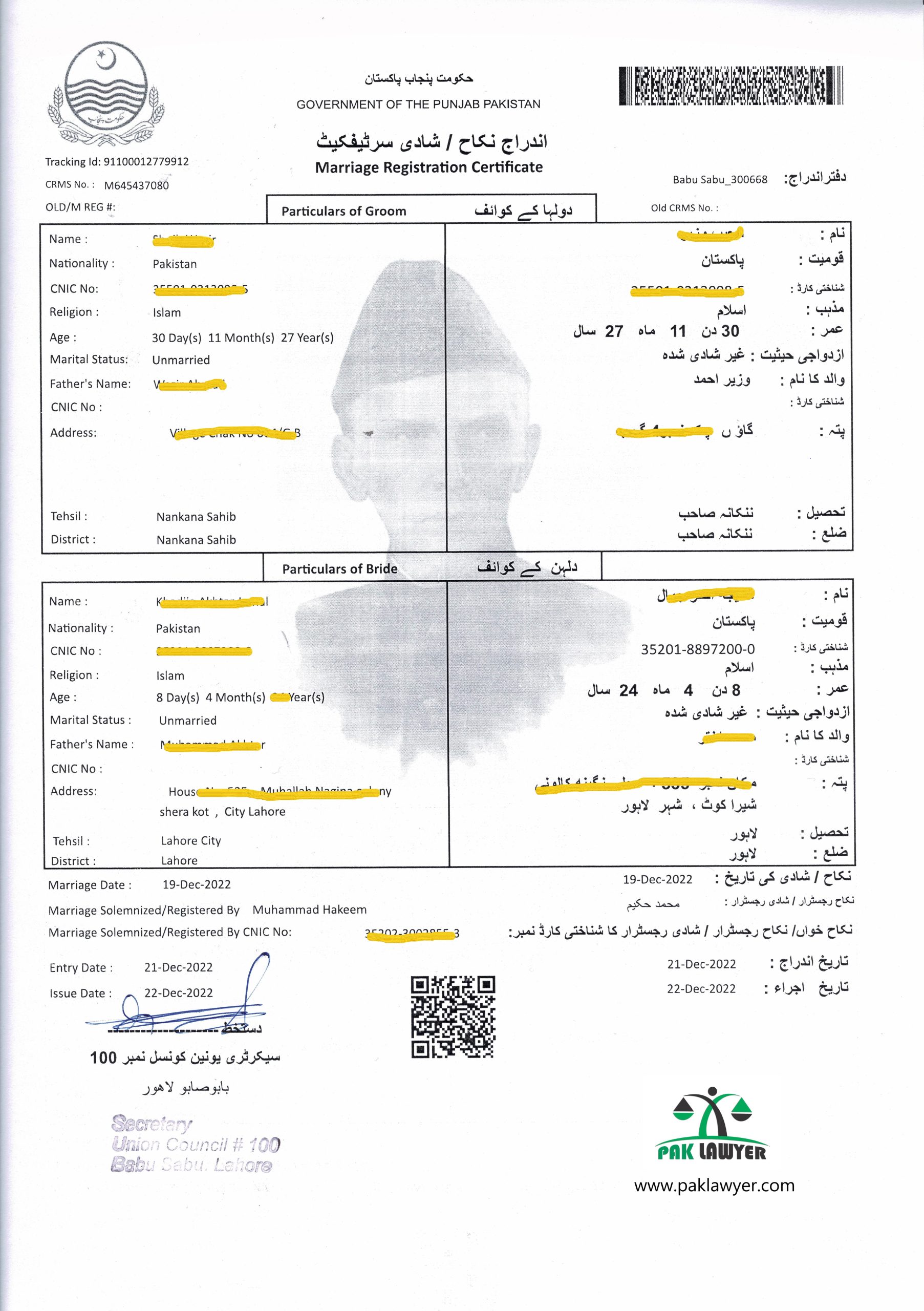
8. Incorporation of Divorce in Nadra: The divorce certificate is issued following approval from the NADRA database. Upon receiving authorization from the NADRA system, the Union Council promptly issues the certificate, finalizing the documentation of the divorce proceedings. This ensures that the certificate aligns with and is officially recognized by the authoritative NADRA database, providing an accurate record of the divorce. However, it is imperative for both parties involved in the divorce to individually update their CNIC (Computerized National Identity Card) record or FRC (Family Registration Certificate) record at a NADRA office. This update is facilitated by presenting the issued Divorce Certificate to the NADRA authorities. This ensures that the divorce information is accurately reflected in the official records maintained by NADRA for each party.
This detailed process ensures that divorce in Pakistan is conducted in a systematic and legally sound manner, with provisions for reconciliation efforts and a mandatory waiting period to allow for careful consideration before finalizing the divorce. The divorce process for husbands in Pakistan is entirely distinct from the divorce procedure for wives in the Family Court.
For additional information, please visit our YouTube Channel.
- Step-by-Step Talaq Procedure for a Husband in Pakistan
- How to Get a Divorce Certificate in Pakistan
- Overseas Divorce for Pakistanis Without Visiting Pakistan
- Islamic Talaq Process for Husband in Pakistan
- Legal Advice on Divorce for Overseas Pakistanis

Ensuring Women’s Safety: Navigating Challenges in the Age of Online Taxis

Introduction
In recent years, the use of online taxi services such as Uber, Careem, Indrive, and others has witnessed a substantial surge in Pakistan. These services provide a convenient and seemingly safer alternative to traditional taxis, garnering trust from parents who opt for them to ensure the safety of their daughters studying in schools and universities. Working women, too, have embraced these platforms as a reliable means of transportation. However, amid the growing popularity of online taxis, there have been instances of uneducated drivers causing issues related to pick and drop, credit card usage, and sometimes even harassment.
Challenges Faced by Passengers:
While the majority of online taxi rides transpire smoothly, there have been reports of troubling incidents involving drivers. Situations can escalate when unscrupulous drivers harass passengers, particularly women, and demand exorbitant fares. In some cases, drivers have been reported to lock their cabs, restricting the movement of female passengers, thus jeopardizing their safety.
Legal Perspective:
Such actions not only violate ethical standards but are also illegal under the provisions of Section 509 of the Pakistan Penal Code. This section specifically deals with harassment, stating that if anyone harasses a woman through words, gestures, or actions, they can be sentenced to imprisonment and fined. It is essential for passengers, especially women, to be aware of their rights and the legal consequences these drivers may face.
Police Intervention and Women Safety Application:
To address these concerns promptly, passengers are strongly encouraged to contact the police immediately if faced with any harassment or unsafe situations. The police have introduced a dedicated Women Safety Application for quick assistance. This application allows women to alert law enforcement in emergencies, enhancing their overall safety and security during rides.
Safety Features of Cab Applications:
Cab applications themselves come equipped with safety features that passengers, especially women, should be familiar with. These features allow users to share their real-time location with trusted contacts and even record conversations, serving as valuable evidence in case of any untoward incidents. By actively utilizing these safety measures, passengers can contribute to creating a more secure environment when using online taxis.
Conclusion:
In conclusion, while online taxi services offer convenience and a sense of security, it is crucial to be aware of potential challenges and take proactive steps to address them. By understanding their legal rights, using available safety applications, and leveraging the features embedded in cab applications, passengers, particularly women, can contribute to their own safety.
This article aims to raise awareness about the importance of women’s safety in society, emphasizing that incidents of harassment should not hinder their progress and active participation in the prosperity of our country. Let us collectively work towards creating a safer and more inclusive environment for everyone.
For more information contact Pak-Lawyer Associates

Citizenship of Pakistan for Foreign Spouses: Navigating Legal Terrain
Introduction:
The issue of granting Pakistani citizenship to foreign spouses has become a focal point in legal discussions, marked by recent judgments that shed light on the complexities surrounding this matter. This article endeavors to provide a comprehensive legal exploration of the topic, analyzing recent cases, the broader legal framework, and the procedural aspects involved in acquiring citizenship for foreign spouses in Pakistan.
Legal Landscape:
1. Constitutional Provisions:
Pakistan’s Constitution, adopted in 1973, lays the foundation for citizenship laws. The principle of equality before the law, as enshrined in Article 25, serves as a cornerstone in evaluating the constitutionality of citizenship-related statutes. Recent judicial pronouncements have brought attention to the need for constitutional alignment with international norms.
2. Citizenship Act, 1951:
The Citizenship Act, 1951, governs the acquisition and loss of Pakistani citizenship. Section 10(2) of the Act has been a focal point of legal scrutiny. It delineates different criteria for male and female foreign spouses seeking Pakistani citizenship, leading to allegations of gender-based discrimination.
Recent Judicial Developments:
1. Mst. Rukhsana Bibi and others v. Government of Pakistan (2017):
The Lahore High Court’s judgment in this case addressed the discriminatory nature of Section 10(2) of the Citizenship Act. The court declared the provision as violative of Article 25 of the Constitution, emphasizing the right of foreign spouses to be treated equally regardless of gender. This landmark decision underscores the judiciary’s commitment to eradicating gender-based disparities in citizenship matters. (PLJ 2017 Lahore 14)
2. Suo Moto Case No. 1/K of 2006 (Gender Equality):
The Federal Shariat Court’s decision in this case challenged the discriminatory application of Section 10(2) of the Citizenship Act. The court emphasized the need for legislative amendments to ensure gender equality in the acquisition of Pakistani citizenship by foreign spouses. This precedent adds weight to the call for legal reforms. (PLD 2008 Federal Shariat Court 1)
3. I.A. Sharwani and others v. Government of Pakistan (1991):
This Supreme Court decision interpreted Article 25 of the Constitution, establishing the principles of equal protection of the law. It emphasized that persons similarly situated should be treated alike, laying the groundwork for future discussions on gender equality in citizenship matters.
(1991 SCMR 1041)
4. Secretary Economic Affairs Division, Islamabad v. Anwar-ul-Haq Ahmed and others (2013):
In this Supreme Court judgment, principles related to equal protection of the law were reinforced. The court emphasized that reasonable classification is permissible but must be founded on a reasonable basis, setting standards for evaluating the constitutionality of citizenship laws.
(2013 SCMR 1687)
Procedural Aspects:
1. Citizenship Application:
Foreign spouses seeking Pakistani citizenship typically initiate the process by submitting a formal application to the relevant authorities. The application may require details about the marriage, background information, and reasons for seeking citizenship.
2. Documentation:
Applicants are usually required to submit a set of documents, including marriage certificates, passports, proof of residence, and any other documents deemed necessary by the authorities. These documents help establish the legitimacy of the marital relationship and the eligibility for citizenship.
3. Application Review:
Upon submission, the authorities review the application and supporting documents. This involves verifying the authenticity of the information provided and ensuring that the applicant meets the criteria outlined in the relevant laws.
4. Fee Payment:
In some cases, applicants may be required to pay processing fees. The fee structure is determined by the relevant authorities and is subject to change. The payment is often a prerequisite for the application to be considered.
5. Oath of Allegiance:
If the application is approved, the foreign spouse may be required to take an oath of allegiance to Pakistan. This formalizes the commitment to abide by the laws and principles of the country.
6. Citizenship Ceremony:
Successful applicants may be invited to a citizenship ceremony, where they officially receive their Pakistani citizenship certificate. This ceremony may include the administration of the oath of allegiance in a formal setting.
Legal Implications:
1. Gender Equality:
Recent judgments, including those by the Lahore High Court and the Federal Shariat Court, highlight the imperative of ensuring gender equality in citizenship laws. The principles established in these cases have set a strong foundation for challenging discriminatory provisions.
2. International Commitments:
Pakistan’s commitment to international conventions, such as the Universal Declaration of Human Rights and the International Covenant on Civil and Political Rights, accentuates the need for aligning national laws with global standards. Ensuring equal rights for foreign spouses, irrespective of gender, is in harmony with these commitments.
Moving Forward:
1. Legislative Reforms:
The recent judicial discourse calls for a critical review of existing citizenship laws. Legislative amendments that address gender-based disparities and ensure equal treatment for foreign spouses are essential to harmonize national statutes with constitutional principles and international commitments.
2. Inclusivity and Human Rights:
Recognizing the right of foreign spouses to choose their partners without facing discriminatory legal barriers is a vital step toward building an inclusive and rights-centric legal framework. Upholding human rights principles, including the right to family life, is imperative in shaping legal discourse around citizenship.
Conclusion:
The legal landscape concerning the citizenship of Pakistan for foreign spouses is evolving, guided by recent judicial pronouncements. The imperative of aligning national laws with constitutional guarantees and international commitments is evident. As Pakistan moves forward, fostering inclusivity, recognizing the equal rights of foreign spouses, and understanding the procedural aspects stand as essential pillars in shaping a legal framework that reflects contemporary principles of justice and human rights.
Pak-Lawyer Associates: Your Comprehensive Solution for Family Law and Spouse-Based Immigration Services in Lahore
Introduction:

In the intricate tapestry of legal services, Pak-Lawyer Associates emerges as a beacon of excellence, offering comprehensive solutions for both family law matters and spouse-based immigration services. Specializing in a range of cases including Court Marriage, Child Custody, Divorce, Khula cases, Child Maintenance, and spouse-based immigration, Pak-Lawyer Associates is your trusted partner for navigating the complexities of the legal landscape in Lahore.
Best Lawyer in Lahore for Family Cases:
Pak-Lawyer Associates has earned its reputation as the best in Lahore for family law cases. With a dedicated team of seasoned legal professionals, the firm is well-equipped to handle the intricacies of family matters, providing expert guidance and support to clients during challenging times.
Court Marriage:
For couples seeking legal validation for their union, Pak-Lawyer Associates ensures a seamless and efficient court marriage process. The firm’s expertise in navigating the legal requirements surrounding court marriages makes it the ideal choice for those embarking on this significant life journey.
Child Custody:
In emotionally charged Child Custody battles, Pak-Lawyer Associates stands out for its compassionate yet strategic approach. The legal team prioritizes the best interests of the child, working diligently to secure fair and just outcomes in custody disputes.
Divorce, Khula Cases, and Child Maintenance:
Recognizing the nuanced nature of divorce, Khula cases, and Child Maintenance proceedings, Pak-Lawyer Associates provides expert guidance rooted in a deep understanding of both Islamic and civil law. The firm’s commitment to transparency and efficiency ensures that clients can make informed decisions that shape their future.
Spouse-Based Immigration Services:
Beyond family law matters, Pak-Lawyer Associates extends its expertise to spouse-based immigration services. Navigating the intricacies of immigration law can be daunting, but with Pak-Lawyer Associates, clients benefit from a thorough understanding of immigration processes and a commitment to facilitating smooth transitions for families.
Why Choose Pak-Lawyer Associates?
1. Comprehensive Services: Pak-Lawyer Associates offers a one-stop solution for a wide range of legal services, including family law matters and spouse-based immigration services.
2. Expertise in Immigration: The firm’s proficiency in immigration law ensures that clients receive tailored guidance and support in matters related to spouse-based immigration.
3. Client-Centric Approach: With a focus on empathy and clear communication, Pak-Lawyer Associates places the client at the center of its practice, ensuring a supportive legal journey.
4. Proven Track Record: The firm’s track record of success and satisfied clients attests to its commitment to excellence and dedication to achieving positive outcomes.
Conclusion:
Pak-Lawyer Associates stands as a stalwart in the legal landscape of Lahore, offering unmatched expertise in family law matters and spouse-based immigration services. As the go-to solution for individuals navigating the complexities of the legal system, Pak-Lawyer Associates is committed to providing top-notch legal representation, ensuring that clients can confidently face the challenges ahead, whether they pertain to family matters or immigration issues.
How does the Family Court determine child maintenance?
How does the Family Court address the issue of child maintenance?
Are there specific guidelines and rules governing the determination of maintenance?
This blog aims to answer these questions and explore the parameters that the court considers when deciding on the financial support for minors or spouses.

How is child maintenance determined in family court?
Maintenance, as defined in Section 369 of Muhammadan Law by D.F. Mullah, encompasses the provision of food, clothing, and shelter for a child. However, this definition is not exhaustive and, in our perspective, should be interpreted more broadly to address the contemporary requirements of a minor’s social, physical, mental growth, upbringing, and overall well-being.
This extended interpretation should consider the family’s status, societal norms, and the educational needs of the child, which have gained paramount significance. It is crucial to assess the father’s capacity to pay while determining maintenance.
While maintenance goes beyond mere provisions of food, clothing, and shelter, it does not unconditionally encompass education at higher levels indefinitely. The key consideration is to determine the level of education necessary for the child, taking into account the family’s status and circumstances, enabling them to secure a livelihood through honest and decent means. It is insufficient to assume, for example, that a tradesman’s child can sustain themselves through casual work or dishonest activities. The child must be supported until they can independently earn a living in a manner consistent with their family’s standing.
According to Section 370 of the Muhammadan Law by D.F. Mullah:
1. A father is obligated to maintain his sons until they reach puberty and his daughters until they are married. However, he is not obliged to maintain adult sons unless they are incapacitated by infirmity or disease. The custody of the children by their mother during infancy does not exempt the father from the obligation to maintain them. The father is not obliged to maintain a child capable of self-maintenance through their own property.
2. If the father is indigent and unable to earn, the mother, if financially capable, is obliged to maintain the children as the father would be.
3. If both the father and mother are impoverished, the responsibility for maintaining the children falls on the grandfather if he is financially capable.
When determining the amount of maintenance, the court considers the educational needs, status, and general expenses of the minors, as outlined in PLD 2013 SC 557.
The court also assesses the likelihood of obtaining education and the ability to provide a stable, safe, and healthy environment for the minors. Without due consideration of these factors, the court cannot conclusively determine the amount of maintenance.
There is no rigid formula for determining maintenance, with the primary consideration being the father’s capacity to support the minors. The court takes into account various factors, including the actual needs of the minors, their living conditions, the manner in which the mother is providing for them, any special requirements, and the financial status of the father.
In determining the amount of maintenance, the court must take into consideration a range of factors, including:
1. The income and assets of the applicant.
2. The reasonable needs of the applicant, including those of the minor.
3. The income and assets of the respondent.
4. The standard of living maintained by both the respondent and the applicant.
5. The age of both the applicant and the respondent.
6. The physical and mental well-being of both the applicant and the respondent.
7. The necessary expenses for the education of the minor.
8. The financial obligations of the respondent, encompassing responsibilities towards other family members.
9. Any other pertinent factor deemed relevant to the case.
The court places particular emphasis on the father’s responsibility to meet the special needs of the minor, whether they be medical, physical, or related to specific educational requirements.
In sum, the court carefully considers all relevant circumstances and factors of the case to arrive at a fair determination of the amount of maintenance that the father is obligated to contribute towards the well-being of the minor.
GULL HASSAN KHAN ADVOCATE HIGH COURT
CEO, PAKLAWYER.COM PVT LTD

Legal Procedure for Khula in Pakistani Family Courts
Introduction:
The legal process for obtaining a Divorce or Khula Decree from the Family Court in Pakistan is designed to be accessible and straightforward, especially for wives seeking the dissolution of their marriages. The following delineates the Khula Procedure adopted by the Family Court in Pakistan.
Understanding Khula:
Traditionally, divorce is considered the prerogative of the husband in Islam. However, Islamic law recognizes situations in which a woman may exercise her right to free herself from the marital bond. The dissolution of marriage at the wife’s request in Islam can be pursued through two avenues:
1. Divorce Ordered by the Court: This option is available if the wife can demonstrate that she is facing harm within the marriage, empowering the court to grant a divorce under such circumstances.
2. Khula’: Unlike divorce ordered by the court, Khula’ does not necessitate the presentation of a specific reason. Islam acknowledges a wife’s inherent right to seek Khula’ without providing detailed justifications. Even a wife’s general dissatisfaction with her husband is considered a valid reason for seeking Khula’.
During the application for Khula’, the wife is not obligated to provide extensive reasoning for her decision, other than expressing her desire to end the marital relationship.
In essence, the Khula Procedure in the Family Court of Pakistan aims to facilitate the dissolution of marriages for women, providing a legal avenue for those seeking relief from an untenable marital situation.
Khula Procedure in the Family Court:
A wife can initiate the dissolution of her marriage through Khula by personally navigating the procedure or by enlisting the assistance of a lawyer. The process can be summarized as follows:
1. Preparation of Legal Case: A competent lawyer prepares a case brief according to the law, securing the legal interests of the wife and obtaining her signatures.
2. Filing the Case: The lawyer files the case before the court, prompting the court to summon the husband through notices (registered mail and TCS, etc.) and publication in a newspaper. The family court mandates the husband’s appearance within 10 to 15 days and provides an opportunity for him to file a written statement.
3. Court Appearance and Reconciliation: If the husband appears before the court, he can file a written statement. The court then sets a date for reconciliation (7 to 10 days).
4. Reconciliation Attempt: On the reconciliation date, the court endeavors to reconcile the parties. If reconciliation fails, the court issues the Khula decree.
Non-Appearance of Husband:
If the husband fails to appear before the court on the given date, the court issues an ex-parte decree in favor of the wife.
Divorce Effectiveness Certificate from Union Council:
Obtaining a Divorce Certificate is mandatory for updating marital status in NADRA and contracting another marriage. After receiving the Khula decree, the wife submits it to the relevant Union Council, along with a notice of intimation for the issuance of the divorce certificate. The Union Council, situated in the wife’s residential area at the time of filing the suit, then issues notices to the husband for reconciliation. If reconciliation fails or the husband remains absent from proceedings, the Union Council is obligated to issue the Talaq/Divorce Certificate after 90 days from the date of notice to the concerned Union Council. It’s important to submit the notice of intimation of Divorce/Khula promptly to initiate the 90-day period.

As per Section 10 (2) of Pakistan Citizenship Act 1951, Foreign Ladies Married to Pakistani Nationals are eligible for citizenship of Pakistan but now Higher courts of Pakistan also allows the same facility to male foreign citizen also.
(Following documents are required other than those mentioned in the form.)
- Prescribed application form ‘F’ (in quadruplicate).
- An affidavit on Rs.20/- non-judicial stamp paper from the applicant regarding/mentioning detailed facts of the case, duly attested by notary public or magistrate.
- A similar affidavit from the husband on Rs.20/- non-judicial stamp paper.
- An Affidavit duly supported by documentary evidence about her aggregate stay in Pakistan for a period of 05 years.
- Photostat copies of relevant pages of applicant’s foreign passport.
- Photostat copy of residential permit/visa.
- Photocopy of a marriage certificate.
- Photostat copy of domicile certificate of the applicant (in case of the applicant is other than Commonwealth Citizen).
- List of close-relations residing(in case of Indian national females).
- Photostat copies of Pakistan Citizenship Certificate or any other evidence establishing the husband’s citizenship of Pakistan.
- 10 colour photographs with light blue background size 2X1 1/2. One attested on front and one on the back by notary public/magistrate.
- Photostat copies of the relevant pages of the Pakistani passport or national identity card of the husband. ( All of the above mentioned documents may be attested by notary public/magistrate except the photographs which have to be attested in a specified manner.)
- Bank challan of prescribed amounts Rs.200/-.
- Oath of allegiance taken before 1st Class Magistrate (in case the applicant is a citizen other than Commonwealth countries).
- Two certificates from two different gazetted Government Officers confirming the date national status of the applicant’s husband. Such certificates must also indicate the date and place of birth of the applicant’s husband and his income.
- Applications form can either be submitted to Directorate General Immigration & Passports Islamabad or to the Federal Government (i.e. Ministry of Interior).

Age Relaxation Rules for the Initial appointment to Civil Posts has been mentioned here with detail. These rules are according to the 1993 relaxation of Upper Age Limit Rules Vide Islamabad, the 4th November, 1993. S.R.O. 1079(I)/93. These Rules will not be applicable for the appointment to the posts in BPS-17 to be filled through C.S.S. Competitive Examination. In pursuance of rule 12 of the Civil Servants (Appointment, Promotion and Transfer) Rules, 1973, the President is pleased to make the following rules, namely:- Maximum age limit relaxation is as under:-
(i) (a). Candidates belonging to Scheduled Castes, Buddhist Community, recognized tribes of the Tribal Areas, Azad Kashmir and Northern Areas for all posts under the Federal Government of Pakistan 3 years.
(b) Candidates belonging to Sindh (Rural) and Baluchistan for posts in BPS-15 and below under the Federal Government of Pakistan 3 years.
(ii) Released or Retired Officers / personnel of Pakistan Armed Forces 15 years or the number of years actually served in the Armed Forces of Pakistan, whichever is less will be applicable.
(iii) Government servants who have completed two years continuous government service on the closing date for receipt of applications. 10 years, up to the age of 55 years.
(iv) Disabled persons for appointment to posts in BPS-15 and below 10 years.
(v) Widows, son or daughter of a deceased civil servant who dies during service 5 years.
2010 PLC(CS) 364 PESHAWAR-HIGH-COURT-NWFP
Arts. 25 & 199—Constitutional petition—Civil service—age relaxation –relaxation in upper age limit of educated divorced women—Claim for —Plea of the petitioner lady was that if educated married women were divorced at a later stage and by then they crossed the upper age limit , could not get employment in government Semi government and Autonomous Bodies because no relaxation in upper age limit was provided therefor —Relevant rules regarding age relaxation , had shown that for different classes of persons concession of relaxation in upper age limit was provided, however, no rule/provision existed to the extent that concession i.e. relaxation in upper age limit to the divorced educated women, who after divorce were in dire need of earning bread for themselves and for their kids—Such omission would amount to discriminatory treatment–Not providing rule to grant relaxation in upper age limit to such professionals and highly skilled women was clearly hit by the prohibitory command of Art.25 of the Constitution—High Court observed that immediate steps were required to be taken to appropriately and suitably amend the rules on the subject and experts on the subject would sit together to frame rules for granting such concession in age relaxation to such divorcees, who were highly skilled, professional and well-educated—Constitutional petition was admitted and allowed and federal /Provincial and all the Autonomous Bodies etc. were directed to frame rule granting relaxation in upper age limit to such divorced women, who wanted to join or rejoin service in said Bodies.
2019 SCMR 1021 SUPREME-COURT
S. 26—Khyber Pakhtunkhwa Revenue and Estate Department (Tehsildar, Naib-Tehsildar/Subordinate Revenue Service) Rules, 2008—Patwari, post of—Upper age limit, relaxation in—By way of a notification an amendment was made in the Khyber Pakhtunkhwa Revenue and Estate Department (Tehsildar, Naib-Tehsildar/ Subordinate Revenue Service) Rules, 2008 (‘the Rules’) and upper age limit for the post of Patwari was extended to 35 years and it was clearly stated that no provision for age relaxation over 35 years would be allowed under any circumstances by any Authority—Held, that age of petitioner at the time of his turn for being appointed as Patwari was beyond maximum upper age limit of 35 years—Court had no power to further relax the upper age limit for that the jurisdiction of the Court was to apply the law and rules as they appeared on the statute book—Vires of law itself had not been challenged by the petitioner, thus, no deviation from the amending notification could be made on any principle of law—Petition for leave to appeal was dismissed and leave was refused.
2019 SCMR 1 SUPREME-COURT
Rr. 3(1), 3(7), 4(4) [as it existed before amendment by SRO Nos.275(I)/2017], 17(2)(f) & 17(3)—Pakistan Television Corporation’s Memorandum and Article of Association, Arts. 83, 85, 86, 87 & 95—Companies Act (XIX of 2017), Ss. 153(g), 204(5) & 212—Constitution of Pakistan, Art. 184(3)—Human rights case—Chairman and Director, Pakistan Television Corporation (“PTV”)—Appointment, salary and allowances—Legality—Lack of fiduciary behavior—While the office of the Managing Director of PTV remained vacant, that of the Chairman was occupied by person “Q”—Summaries were moved for relaxation of the upper age limit of 65 years for appointment of “Q” and for the approval of an immensely generous salary package for him—On account of complete lack of skill and experience of running a company, PTV, once a profitable institution, experienced a sharp decline both financially and in its reputation as a major player in the electronic media market—Pakistan Television Corporation (“PTV”) was burdened with an exorbitant amount of expenses on account of inefficient and inept manage ment—Business manage ment skills and experience of running a big company were the basic requirements for an MD/Chairman to efficiently run a huge commercial enterprise, such as PTV, but nowhere from the record produced it was evident that the Federal Government considered such criteria while nominating “Q” as a Director of PTV—Post of Director, PTV did not fall within the definition of ‘tenure post’, therefore the conditions and procedure for appointment provided under Cl.(iii) of Sl. No.141 of the Civil Establishment Code (Esta Code) applied to it—Said conditions provided for publishing an advertisement to gauge the talent pool available for such post, filtering and then assessing the best candidates for the post in accordance with the criteria laid down in the Public Sector Companies (Corporate Governance) Rules, 2013—Admittedly, in the present case, there was no advertisement for appointment thus there was no consideration of any pool of potentially capable candidates from which “Q” was chosen—Disregard of the procedure laid down in Cl.(iii) of Sl. No.141 of the Civil Establishment Code (Esta Code) by the Federal Government in the present case was meant to benefit a predetermined candidate, “Q”, whose appointment as Director, PTV was illegal as it was made in violation of the prescribed legal criteria and procedure—Meeting of Board of Directors for appointment of Chairman, PTV was held after the notification of appointment of “Q” as Chairman had already been issued and after he had assumed his charge as a Director and Chairman—Appointment of “Q” as Chairman, PTV, was, thus, also illegal—Furthermore remuneration and other benefits/allowances of “Q”, being a Director who also held the additional charge of Chairman, had to be determined by the Directors of PTV in a duly constituted Board meeting, which was absent in the present case—Instead remuneration of Q was determined by the Ministry of Information, Broadcasting and National Heritage in a summary for the Prime Minister, which was seen and approved by the then Minister of Information—Said summary was subsequently approved by the Finance Division and thereafter was seen and approved by the Prime Minister through an approval signed by the then Secretary to the Prime Minister—Besides salary approved for “Q” was also far beyond the salary admissible to MP-I public office holders—Certain unlimited benefits/allowances granted to the office of the Chairman of PTV were not in line with the policy of the ‘best interests of the public sector company’—Despite the fact that PTV had suffered colossal losses during the past few years, “Q” was awarded with a generous salary and exorbitant perks and privileges—Payment of salary and the benefits/allowances to “Q” was unlawful and unauthorized under the Public Sector Companies (Corporate Governance) Rules, 2013, and Pakistan Television Corporation’s Memorandum and Article of Association, therefore, he was not entitled to such payments and could not retain the same—While holding office of Director and Chairman, PTV, “Q” also hosted a programme for his own self-promotion and personal aggrandizement by utilizing public money—Furthermore, “Q” breached his fiduciary duties when he hired his own son as a scriptwriter for a drama aired on PTV, used two instead of one official car and got maintenance and running allowances for a third personal car, used PTV funds to pay the membership and subscription fees of a club, incurred exorbitant expenses for renovation of various offices and for entertainment of guests inside and outside the office, and used public funds to attend a book exhibition completely unrelated to his duties as a Director and Chairman of PTV—Minister for Information, Minister for Finance and the then Secretary to the Prime Minister were all responsible for the appointment of “Q” as Director and Chairman of PTV, and for the illegal fixation of his terms and conditions of service—Supreme Court directed that on account of lack of fiduciary behavior, “Q” was ineligible to be appointed as a Director of any company [as per S. 153(g) of the Companies Act, 2017] from date of present judgment; that administrative actions taken by “Q” were beyond the scope of duties of a Chairman as provided in the Public Sector Companies (Corporate Governance) Rules, 2013, therefore all such orders passed by him during his tenure were declared to be illegal and void ab initio; that the loss caused to PTV (as calculated by the Supreme Court) due to the appointment of “Q” shall be recovered from “Q”, the then Minister for Information, Minister for Finance and Secretary to the Prime Minister in the ratios 50% (“Q”), 20% (Minister for Information), 20% (Minister for Finance) and 10% (Secretary to the Prime Minister) respectively; that the Federal Government shall appoint a full-time MD of PTV (if the position was still vacant) after fulfilling all legal, procedural and codal formalities, strictly in accordance with law—Human rights case was disposed of accordingly.
2019 PLC(CS) 1014 SUPREME-COURT
S.26—Khyber Pakhtunkhwa Revenue and Estate Department (Tehsildar, Naib-Tehsildar/Subordinate Revenue Service) Rules, 2008—Patwari, post of—Upper age limit, relaxation in—By way of a notification an amendment was made in the Khyber Pakhtunkhwa Revenue and Estate Department (Tehsildar, Naib-Tehsildar/ Subordinate Revenue Service) Rules, 2008 (‘the Rules’) and upper age limit for the post of Patwari was extended to 35 years and it was clearly stated that no provision for age relaxation over 35 years would be allowed under any circumstances by any Authority—Held, that age of petitioner at the time of his turn for being appointed as Patwari was beyond maximum upper age limit of 35 years—Court had no power to further relax the upper age limit for that the jurisdiction of the Court was to apply the law and rules as they appeared on the statute book—Vires of law itself had not been challenged by the petitioner, thus, no deviation from the amending notification could be made on any principle of law—Petition for leave to appeal was dismissed and leave was refused
2019 PLC(CS) 808 PESHAWAR-HIGH-COURT
SHAH SAUD versus KHYBER PAKHTUNKHWA PUBLIC SERVICE COMMISSION
R. 2(2)—Appointment against the post of Civil Judge-cum-Judicial Magistrate—relaxation in upper age limit—Expression “excluded” and “relaxation “—Petitioners-candidates sought relaxation in upper age limit but same was refused by the Public Service Commission on the ground that they had already availed two years relaxation in upper age limit granted by the High Court and they were not entitled to further age relaxation beyond two years already allowed to them—Validity—Candidate for the post of Civil Judge-cum-Judicial Magistrate was not entitled to two relaxation s in the upper age limit under R.2(2) of Khyber Pakhtunkhwa Initial Appointment to Civil Posts (relaxation of Upper age Limit) Rules, 2008 but a maximum period of two years was to be ‘excluded’ from the upper age limit of every candidate for the post who had practiced at Bar for a period not less than two years—Word ‘excluded’ had different connotation from the word ‘relaxation ‘—Candidate having already availed one relaxation would still be entitled to the benefit of ‘exclusion’ of two years of his practice at the Bar from his/her age under R.2(2) of Khyber Pakhtunkhwa Initial Appointment to Civil Posts (relaxation of Upper age Limit) Rules, 2008—Constitutional petitions were allowed in circumstances.
2019 PLC(CS) 380 PESHAWAR-HIGH-COURT
Appointment against the post of Assistant Sub-Inspectors—Dispute as to age relaxation of candidates—Appointments held in abeyance till the decision about other candidates—Petitioners got relaxation in upper age limit and notification for their appointment was issued—Notification for appointment of petitioners was held in abeyance by the department till the decision of cases of other candidates with regard to age relaxation by the Provincial Government—Validity—Employees in case of violation of terms and conditions of service could not invoke constitutional jurisdiction of High Court—Keeping of appointment notification/order in abeyance did not fall within the purview of “terms and conditions” of service of petitioners and such order was abuse of authority and powers—Department had not dealt the petitioners in accordance with law—If something was wrong on the part of petitioners-employees, they were to be issued charge sheet or explanation letter in accordance with Rules—Authorities could not act in violation of the provisions of Constitution and law of the land—Department had no lawful authority and jurisdiction to hold the notification/order of appointment of employees in abeyance—Impugned order was set aside—Constitutional petition was allowed accordingly.
2019 MLD 606 KARACHI-HIGH-COURT-SINDH
Dr. NAHEED FATIMA Versus PAKISTAN INTERNATIONAL AIR CORPORATION (PIAC)
Ss. 17, 22 & 25, Schedule-II, Rr. 5(2) & 20—Fatal Accidents Act (XIII of 1855), S. 1—Qanun-e-Shahadat (10 of 1984), Arts. 117, 120 & 122—Suit for recovery of damage s—Onus to prove—Predecessor-in-interest of plaintiffs died in an aircraft crash—Plaintiffs sought recovery of damage s from Airline company on allegations of wilful misconduct, carelessness and negligence—Validity—Onus to prove, non-existence of liability, specially caused on account of accident not having been denied, in presence of language of R. 20 of Sched. II of Carriage by Air (International Convention) Act, 1966 and Art. 122 of Qanun-e-Shahadat, 1984, concept of no-fault liability rested with Airline—Under Carriage by Air (International Convention) Act, 1966, claimant only had to bring up his/their case and onus of proof in that regard rested with Airline to disprove same—Same would be to extent and what was within prescribed limit of 250,000 Francs as provided in S. 22 of Carriage by Air (International Convention) Act, 1966 where applicable as well as under S. 25 of Carriage by Air (International Convention) Act, 1966 for an ultimate loss, if Airline was not able to prove anything in adversity—Special law did not provide availability to Airline to contest and challenge claim other than as provided under Rule 20 of Sched. II of Carriage by Air (International Convention) Act, 1966 which stand defendant had not preferred to take for obvious reasons—relaxation of limit as provided under S. 25 of Carriage by Air (International Convention) Act, 1966 was also found available as Airline had neither come up with its own version of accident nor report of Civil Aviation Authority was challenged—Suit was decreed accordingly.
Ask a legal question for more information.

Interim order fixing maintenance allowance From Family Court of minor and Wife; Under section .17A of the West Pakistan family courts act , 1964 during pendency of proceedings before the family court ; financial constraints faced by minors were ameliorated.
2019 CLC 1261 LAHORE-HIGH-COURT-LAHORE
Syed MUHAMMAD TAQI RAZA NAQVI Versus JUDGE FAMILY COURT
S. 17-A—interim maintenance , fixation of—Scope—Family Court was bound to fix monthly interim maintenance allowance of the wife or a child on the first date of appearance of defendant.
2020 CLC 131 ISLAMABAD
Dr. AQUEEL WARIS versus IBRAHIM AQUEEL WARIS
Ss. 5, Sched. & 17-A—Constitution of Pakistan, Arts. 4 & 10-A—Suit for recovery of maintenance allowance—interim order—interim maintenance , fixation of—Contention of petitioner-father was that interim maintenance fixed by the Family Court was exorbitant—Validity—Any such order in which financial capacity of father viz-a-viz his own expenses had not been considered properly then interim maintenance fixed by the Family Court would be unjust, perverse, harsh, excessive and fanciful—No appeal had been provided against the order of interim maintenance and in such a manner, father had been deprived of constitutional guarantee of equal protection of law—Order of higher maintenance in favour of minor would create financial problems for a father—When he would not be able to comply with the terms of the interlocutory order, his right to contest the suit on merit would close and would be knocked out by the court—-Interlocutory orders of Family Court could not be assailed in constitutional jurisdiction—Father should not be punished by way of interim maintenance allowance—interim maintenance fixed by the Family Court, in the present case, was exorbitant but High Court in constitutional jurisdiction would not determine the factual aspect of adequacy or inadequacy of said maintenance —Family Court was directed to decide the suit within the period of one month so that father could only be burdened with interim maintenance for one month which would be subsequently merged into final judgment—Constitutional petition was dismissed, in circumstances.
2019 PLD 645 SUPREME-COURT
HUMAN RIGHTS CASE NO.18877 OF 2018
Ss. 2(63), 2(66), 147, 168 & 236—Federal Excise Act (VII of 2005), S. 3 & First Sched. Table II, Sr. No. 6 — Punjab Sales Tax on Services Act (XLII of 2012), Ss. 1(4), 2(38) & 3 & First Sched. Classification No. 9812.1210—Sindh Sales Tax on Services Act (XII of 2011), Ss. 2(97), 3 & 8 & Second Sched. Tariff heading No.9812.1210—Khyber Pakhtunkhwa Finance Act (XXI of 2013), Ss.2(48) & 19 & Sched. II, Serial Nos. 4(5) & 4(9)—Balochistan Sales Tax on Services Act (VI of 2015), Ss. 2(39) & 3 & First Sched. Classification No.98.12.1000—Constitution of Pakistan, Arts. 4(2)(a), 23, 24 & 184(3) & Pt. II, Chapt.1—Human rights case regarding deduction of taxes and other charges by mobile companies in Pakistan—Levy/imposition of advance income tax, Federal excise duty, sales tax on services and service/maintenance charges—Constitutionality and legality—Question as to whether the Supreme Court under Art.184(3) of the Constitution had the jurisdiction to determine the validity of the imposition and collection of taxes—[Per Qazi Faez Isa, J (Majority view): Only once the taxes imposed on customers of cellular companies by the Income Tax Ordinance, 2001, the Federal Excise Act, 2005, the Punjab Sales Tax on Services Act, 2012, the Sindh Sales Tax on Services Act, 2011, the Khyber Pakhtunkhwa Finance Act, 2013, and the Balochistan Sales Tax on Services Act, 2015, were declared contrary to the Constitution and struck down could their imposition and collection from subscribers/customers of cellular telecom companies be stopped—None of the said statutes, which had imposed the taxes, had been declared by a competent Court to be beyond the legislative competence of the legislature which had imposed them nor had it been declared that they contravened any constitutional provision—In exercise of power under Art.184(3) of the Constitution the Supreme Court may pass appropriate orders for the enforcement of Fundamental Rights—Said Fundamental Rights were those conferred by Chap. 1 of Part II of the Constitution; protection from taxation was not listed as one of these Fundamental Rights—Taxes could not be presumed to be against the public interest since taxes were spent for the benefit of the public—Supreme Court was generally slow in entertaining challenges to taxes which were imposed by the appropriate legislature in apparent conformity with the provisions of the Constitution—interim order of the Supreme Court whereby the recovery of taxes by cellular companies was suspended did not record reasons nor did it determine that the imposition of the taxes was without jurisdiction—Supreme Court directed that the recovery of the taxes in question may be resumed by the cellular telecom companies, however, they were not allowed to impose any service/maintenance charge thereon as they had elected not to impose these charges, and that it would be unfair and unjust to demand that the cellular telecom companies make good the loss of the taxes that could not be recovered for the period during which their recovery was suspended by an interim order of the Supreme Court—Human rights case was disposed of accordingly—[Per Ijaz ul Ahsan, J dissenting (Minority view)]: Framers of the Constitution, had intentionally, deliberately and by conscious design placed no restriction on the types of fundamental rights for enforcement of which powers under Art.184(3) of the Constitution could and could not be exercised—As long as a matter met the two conditions, in that, it involved a question of public importance with reference to the enforcement of any of the Fundamental Rights conferred by Chap. I of Part II of the Constitution, it was immaterial whether the violation related to a fiscal matter, taxation, a matter involving property rights, personal freedoms or human liberties, the Supreme Court could and should exercise its powers to come to the rescue of the citizen whose rights may be at risk of being bulldozed, destroyed or encroached upon by the State with all the might and resources available to it—With a population of over 200 million out of which the number of cellular subscribers was approximately 150 million (in mid of the year 2018), there could be no two opinions that the present matter regarding imposition of taxes on, inter alia, topping up of mobile phone balance, affected and had repercussions on the public at large and was not an individual or private grievance—Issue in the present matter was that of alleged unlawful extraction of money in the form of advance tax under S.236 of the Income Tax Ordinance, 2001 from millions of cellular subscribers who did not fall within the relevant tax bracket for the purposes of the said Ordinance—Money being taken from cellular subscribers constituted ‘property’ as envisaged by Arts. 23 & 24 of the Constitution, therefore, the contention that the present matter did not involve the enforcement of any Fundamental Rights was incorrect—Apart from the Fundamental Rights contained in Chapter I of Part II of the Constitution, the deduction and collection of such advance tax was also seemingly a clear contravention of Art. 4(2)(a) of the Constitution—Contention that the Supreme Court did not have jurisdiction under Art. 184(3) of the Constitution to determine the validity of the imposition and collection of taxes which had been imposed pursuant to statutes passed by competent legislatures under the Constitution, was misconceived—While dealing with a matter under Art.184(3) of the Constitution, the Supreme Court was neither bound by the procedural trappings nor limitations of Art.199 of the Constitution, hence, the interim order of the Supreme Court whereby recovery of the taxes in question by the cellular telecom companies was suspended, was neither without jurisdiction, nor did it suffer from any legal, procedural or jurisdictional error, defect, flaw or infirmity whatsoever.
2019 PLD 102 LAHORE-HIGH-COURT-LAHORE
MAQSOOD PERVAIZ CH. Versus Mst. NAUSHEEN CHAUDHARY
S. 17-A—Non-compliance of order for interim maintenance —Effect—Decree for maintenance —Family Court, duty of—Scope—Family Court was vested with the power to pass an order for interim maintenance at any stage of proceedings in a suit for maintenance under S.17-A of the Family Courts Act, 1964 to be paid to a child by the fourteenth day of each month, failing which the Court may strike off the defence of defendant and decree the suit but such powers were not to be exercised arbitrarily, illegally and whimsically—Even in case of non-compliance of order of interim maintenance , the Family Court was obliged under S.17-A of the Family Courts Act, 1964 to look into the contents of plaint and other supporting documents on the record of the case.
2019 PLD 102 LAHORE-HIGH-COURT-LAHORE
MAQSOOD PERVAIZ CH. Versus Mst. NAUSHEEN CHAUDHARY
S. 17-A—Suit for recovery of maintenance allowance filed by daughter who had attained majority—Daughter living separately from father in circumstances where father had already made financial arrangements for daughter—Effect—Daughter, who was aged 35 years and allegedly remained unmarried, filed a suit against her separated parents for recovery of maintenance allowance—Family Court fixed the interim maintenance @ Rs.18,000/- with the direction to the father to pay the maintenance to the daughter—On failure to pay the interim maintenance , the Family Court decreed the suit by invoking the provisions contained in S.17-A of the Family Courts Act, 1964 and directed the father to pay Rs.20,000/- per month with 20% annual increase from the date of institution of the suit till marriage of the daughter—Father contended that he could be held responsible for payment of maintenance to the daughter only when she showed obedience to him; that his daughter was a major and she was avoiding living with him—Validity—Daughter was a major having age of 35 years and she had instituted the suit against both her parents—Daughter lived separate from her father since separation of matrimonial tie of her parents—Admittedly, soon after separation, the father had arranged a source of maintenance for the daughter in the shape of house handed over to the mother, who initially maintained her through the income of rent—Said fact clearly showed that the father was well aware of his responsibilities to maintain her daughter and for that very purpose he had made sufficient arrangements—Strangely, the Family Court had only burdened the father with the liability of maintenance even though the daughter had claimed maintenance from both her parents—Decree for maintenance passed by Family Court was set-aside in circumstances—High Court directed that suit filed by daughter for recovery of maintenance allowance shall be deemed to be pending before the Family Court, which shall decide the same afresh strictly in accordance with law—Constitutional petition was allowed accordingly.
2019 PLD 102 LAHORE-HIGH-COURT-LAHORE
MAQSOOD PERVAIZ CH. versus Mst. NAUSHEEN CHAUDHARY
S. 17-A—Suit for recovery of maintenance allowance filed by daughter who had attained majority—Family Court could fix the interim maintenance of a child but the daughter in the present case was admittedly neither of tender age, infant, immature, descendant or young, rather she was aged about 35 years, thus, the order fixing the interim maintenance was not tenable on such score alone—Constitutional petition was allowed accordingly.
2019 CLC 1261 LAHORE-HIGH-COURT-LAHORE
Syed MUHAMMAD TAQI RAZA NAQVI
Versus JUDGE FAMILY COURT
S. 17-A—interim maintenance , fixation of—Scope—Family Court was bound to fix monthly interim maintenance allowance of the wife or a child on the first date of appearance of defendant.
2014 CLC 860 LAHORE-HIGH-COURT-LAHORE
Ss. 17-A & 5, Sched.—Constitution of Pakistan, Art. 199—Constitutional petition—Maintainability—Suit for recovery of maintenance allowance—Interim maintenance was fixed by the family court but same was not paid by the husband and his defence was struck off—Contention of husband was that wife had refused to perform matrimonial obligations and she was not entitled for any maintenance allowance—Suit was decreed concurrently—Validity—Constitutional petition was not maintainable as Judge family court was not arrayed as one of the respondents—Husband did not challenge the validity of order by virtue of which interim maintenance was fixed—Husband was estopped to question the correctness of such order through present constitutional petition—Impugned order could not be declared to have been passed without jurisdiction and lawful authority—family court had rightly insisted upon implementation of order for payment of interim maintenance—Section 17A of West Pakistan family court s act , 1964 empowered the family court to strike off defence of husband who had failed to pay interim maintenance and decree the suit without recording evidence—Suit was rightly decreed by the court s below—Constitutional petition was dismissed in circumstances.
2013 YLR 965 LAHORE-HIGH-COURT-LAHORE
S. 17A —Constitution of Pakistan, Art. 199—Constitutional petition against interim order—Maintainability—Conditions—Interim maintenance, order for—Suit for recovery of maintenance allowance—Husband assailed order of family court whereby he was ordered to pay interim maintenance during pendency of proceedings; on the ground that the quantum of maintenance was exorbitant—Validity—Husband had contended that he had recently been sacked from his job—Disputed questions of fact s regarding job, source of income and salary of the husband had been raised which could not be resolved in the Constitutional Jurisdiction of High court and it was not possible to determine the veracity of claims of husband without recording evidence—Such exercise could not be undertaken in the Constitutional Jurisdiction of High court especially when the finding was only tentative in nature and not final and impugned order was interim in nature—Under Art. 199 of the Constitution, petition against interim order was maintainable if the same was void ab inito, without jurisdiction or had attained status of a final order—family court had jurisdiction to fix interim maintenance allowance, therefore, the impugned order did not fall within such categories—Legislature had under S. 14(3) of the West Pakistan family court s act , 1964 had specifically prohibited filing of appeal against interim order and if Constitutional Petition was allowed to be filed against such order, same would tantamount to defeating and diverting intent of the legislature—Petitioner had an alternate remedy available to him by challenging impugned order in appeal which he may file against ultimate order /judgment if passed against husband—Constitutional petition, being not maintainable, was dismissed in circumstances.
2013 YLR 965 LAHORE-HIGH-COURT-LAHORE
S. 17A —Interim maintenance of minor—Object and purpose—Purpose behind S.17A of the West Pakistan family court s act , 1964 was to ensure that during pendency of proceedings before the family court ; financial constraints faced by minors were ameliorated.
2013 PLD 64 LAHORE-HIGH-COURT-LAHORE
Ss. 17A & 12A, proviso—Constitution of Pakistan, Art. 199—Constitutional petition—Interpretation of Ss.17A and 12A, proviso, West Pakistan family court s act , 1964—Interim order fixing maintenance allowance—Time period for which such interim order would remain valid—Scope—Joint reading of Ss.17A and 12A of West Pakistan family court s act , 1964 revealed that when family court was made competent to pass an interim order for payment of maintenance allowance, it was also made incumbent upon the family court to dispose of the case pending before it within a period of six months from the date of institution—Order passed under S.17A of the West Pakistan family court s act , 1964 would be, at most, effective for a period of six months, which time had been allocated by virtue of S.12A for final disposal of a lis pending before family court —When the maximum age of an interim order passed under S.17A of the West Pakistan family court s act , 1964 expired, continuation of proceedings before family court , would violate provisions of S.12A of the said act —Age of an order passed under S.17A of West Pakistan family court s act , 1964 for interim maintenance would at maximum be six months and if proceedings were not concluded within such time in the main suit wherein interim order was passed, the family court should not insist upon the implementation of the order of interim maintenance—High court observed that family court had to report to the High court for non-implementation of S.12A of West Pakistan family court s act , 1964 or in case of failure of family court to do so, either party would have a right to bring to notice of High court such illegality being continued in the family court and High court shall then, either under proviso to S.12A of the said act or under Art.199 of the Constitution, pass appropriate order and reconsider quantum of maintenance—Constitutional petition was disposed of accordingly.
Please see Q & A for more information.

Adoption of Christian Child from Pakistan by American Nationals:
A case Law Study
PLJ 2012 Karachi 177
Present: Salman Hamid, J
Mrs. INGRID PEREIRA and another–Petitioners
versus
ADDITIONAL DISTRICT JUDGE, KARACHI SOUTH and 2 others–Respondents
C.P. No. S-762 of 2011, decided on 16.11.2011.
Guardians and Wards Act, 1890 (VIII of 1890)–
—-S. 7, 10 & 26–Constitution of Pakistan, 1973, Art. 199–Constitutional petition–Appointment of guardian–Christian religious–Adoption–Petitioners were close relatives of father of minor children and were settled abroad–Petitioners had adopted the minors with the consent of their father and sought guardianship certificate for taking the minors abroad–Family Court and Lower Appellate Court declined to issue guardianship certificate in favour of petitioners–Validity–Interest and welfare of two minors had been properly safeguarded and father of minors fortified the fact of adoption by giving his no objection affidavit to such an extent–Held: Record showed that well being of two minors, who were Roman Catholic Christian, was with petitioners who were living in better financial and social conditions in U.S.A.–Both the minors were Roman Catholic, so were the petitioners who wanted to adopt them and therefore, they were not governed by Muslim Personal Law–High Court keeping in view the welfare of the minors and fact that orders of two Courts below were based on conjectures and surmises and without appreciation of legal position, allowed the petitioners to take two minors outside the jurisdiction of competent authority for the purposes of adoption in U.S.A. and orders passed by two Courts below were set aside–Petition was allowed. [Pp. 180 & 181] A, B & D
Adoption Laws;
—-Connotation–Adoption is defined as a judicial or administrative act which establishes a permanent legal parent and child relationship between a minor and an adult who is not already the minor’s legal parent and terminates legal parent-child relationship between the adoptive child and any former parent. [P. 181] C
Mr. Muhammad Umer Lakhani, Advocate for Petitioners.
Respondent No. 3 in person.
Miss Haleema Khan, A.A.G. (On Court Notice).
Date of hearing: 16.11.2011.
JUDGMENT:
Mrs. Ingrid Preira, wife of Mr. Terence Preira and Mr. Terence Preira, (the Petitioners), real sister and brother-in-law of late Carol Bob through their attorney namely Mrs.Lilly Rose Francis, applied under Sections 7, 10 and 26 of the Guardians and Wards Act, 1890 to the Family Judge, Karachi South, through Guardian and Ward Application No. 275 of 2010 (the Application) for their appointment as legal guardian of the two minors, namely Whitney Ingrid Lourdes Bob and Britney Davina Mary Bob (Two Minors), which application in terms of Order dated 11-8-2010 was dismissed on the ground that the father of the Two Minors is alive and there was no sufficient or cogent reason for appointment of the petitioners as their (Two Minors’) guardian. Aggrieved by such an Order, Family Appeal No. 92 of 2010 was filed, which, too was dismissed by the IV-Additional District Judge, Karachi South in terms of Order dated 29-3-2011 upholding the Order of the Family Judge Karachi South. Through present petition both the above Orders have been questioned.
- It was asserted by the learned counsel for the petitioners that the two Courts below gravely erred in not appreciating that the welfare of two Minors laid with the petitioners and that father of the two Minors (Respondent No. 3) having accorded no objection to the grant of the application, there was no reason available for dismissal thereof; the Orders passed by the two Courts below were mechanical. It was further argued that the Orders of the two Courts below were based on conjectures and surmises and that the welfare of the Two Minors could not have been determined on such basis. It was implored that the two Courts below failed to appreciate the fact that the Petitioner No. 1 is a real aunt of the Two Minors and was also their God Mother. It was also not appreciated by the two Courts below that the petitioners initiated process for adoption of the Two Minors in the United States of America and followed the rigorous procedure required by the USA Immigration Law who on their turn extensively examined the case of adoption of the Two Minors and carried out thorough studies before allowing the adoption process. It was, therefore, asserted that the present petition be granted by declaring the Orders of the two Courts below to be contrary to law.
- I have heard the learned counsel for the petitioners and learned A.A.-G. It is a matter of record that the father of the Two Minors has no objection to the grant of the petition and that he had also given his affidavit of no objection before the Courts below wherein it was categorically mentioned that he or any other family member of the Two Minors have no objection to the adoption of the Two Minors by the petitioners and that in such affidavit it was further mentioned that the welfare of Two Minors is that the petitioners who are willing to adopt the Two Minors adopt them more particularly when the Petitioner No. 1 is the God Mother of the Two Minors. It was also stated that it was the wish of deceased mother of the Two Minors that the Petitioner No. 1 should adopt the Two Minors and take care of them. It was urged by the Respondent No. 3 in his affidavit of no objection that he will continue to perform all moral and religious duties towards the Two Minors and for better prospects and better future of the Two Minors in terms of education, health and their future life and also female guidance for upbringing the Two Minors the Petitioner No. 1 be allowed to adopt the Two Minors.
- It is a matter of record that the petitioners followed, the U.S Citizenship and Immigration Services process for adopting the child (Two Minors). To substantiate following such process, the petitioners filed various documents with the petition, marked as Annexure “A” to Annexure “A/7”. Annexure A spoke about the meaning of orphan which amongst others also had a meaning to the effect that an orphan is a foreign born child who has sole or surviving parent who is unable to care for the child, consistent with the local standard of foreign sending country, and who has in writing, irrevocably released the child for immigration and adoption (Emphasis provided). Annexure A/1 filed to the petition was a copy of international adoptive home study, which is a requirement by the U.S immigration and citizenship services before approval can be granted, which included a detailed study of the petitioners’ home environment, finances, list of criminal background checks, doctors and psychologist’s names, if any, who have evaluated the petitioners for the purpose of adoption and also details of training that they have taken for the adoption. Annexure A/2 was a document/undertaking by the petitioners that they are Roman Catholics and also that they will facilitate the meeting of the two Minors with their father namely Fabien Bob (Respondent No. 3) (emphasis provided), which undertaking also confirmed the fact that the authorities in the USA have been informed of the fact that the father of the two Minors is still alive and that the two Minors are Roman Catholics. The birth certificates of two Minors were filed as Annexure A/3 and A/4 respectively. These documents also included proof of address of the petitioners in the USA and the proof that tax payment of the above property was made and that the petitioners are residing in USA since 2003. Annexure A/6 was a document in respect of financial details and other related sources, pertaining to petitioners’ financial standing. Photographs of the layout of the residence where the two Minors would live with the Petitioners were also filed to show the standard of living they will have.
- All the above would show that the interest and welfare of two Minors have been properly safeguarded and that the father of the two Minors has fortified the fact of adoption by giving his no objection affidavit to such an extent. In all the cases of the minors, be it the custody or adoption or guardianship the predominant factor is their welfare. It amply came on record that the well being of the two Minors who are Roman Catholic Christian lay with the petitioners who are living in better financial and social conditions in USA which the father of the two Minors wants to extend to them and for such purpose, he also filed affidavit of no objection, wherein amongst others, it was specifically mentioned that he would continue to meet with the two Minors regularly either in Pakistan or in USA.
- It is an admitted position that two Minors are Roman Catholic so also the petitioners who want to adopt them and therefore they are not governed by Muslim Personal Law. It may be noted that in Pakistan there is no law for adoption inasmuch as that Islam does not recognize adoption. However, in United States of America, where the proposed adoption of the Two Minors is to take place has adoption laws; also evident from Annexure A to A/7 for which purpose the petitioners have also put into action the machinery available therefor. Hague Adoption Convention recognizes that a child should grow up in a family environment and in an atmosphere conducive to happiness and understanding which Convention has been adopted by USA with effect from 1-4-2008. Adoption is defined as a judicial or administrative act which establishes a permanent legal parent and child relationship between a minor and an adult who is not already the minor’s legal parent and terminates the legal parent-child relationship between the adoptive child and any former parent. The U.S. Child Citizenship Act, 2000 allows a new child to acquire American Citizenship automatically when he or she enters the U.S as lawful permanent resident. Since in Pakistan there is no adoption law and there is no adoption authority and that Pakistan is also not a Hague Adoption country and no child is adopted in Pakistan, therefore, under such situation and circumstances guardianship proceedings become inevitable. Such. proceedings were therefore also initiated in the case in hand which were dismissed by the two Courts below.
- Looking to the above factors and the paramount consideration i.e. the welfare of the Two Minors and also the fact that the orders of the two Courts below primarily based on conjectures and surmises and without appreciation of the legal position, this petition is allowed and the petitioners are allowed to take the Two Minors outside the jurisdiction of the competent authority for the purposes of adoption in the United States of America and that under the circumstances, the orders passed by the two Courts below are set aside.
- This petition is disposed of in terms hereof. Needless to mention that the learned A.A.-G. also accorded her consent to the grant of this petition after receiving the copy of the statement and affidavit from the petitioners counsel.
(R.A.) Petition allowed.

Succession: Muslim Family Laws Ordinance, 1961
Citations / Case Law study on Succession
2015 SCMR 869 SUPREME-COURT
4— Constitution of Pakistan, Art. 203-D(2), proviso & 203F(1), (3)—Succession—Death of any son or daughter of the propositus before the opening of succession—Inheritance right of children of such son or daughter—Repugnancy to Injunctions of Islam—Section 4 of the Muslim Family Laws Ordinance, 1961, had been declared against the tenets and Injunctions of Islam by the Federal Shariat Court in its judgment rendered in the case of Allah Rakha and others v. Federation of Pakistan and others (PLD 2000 FSC 1)—Effective date of such declaration—Such declaration even if affirmed by the Shariat Appellate Bench (of the Supreme Court) would take effect from 31-3-2000 in view of the provision contained in Art. 203D of the Constitution—Such declaration could not affect previous operation of law or a succession taking place before such date—Appeal was dismissed accordingly.
2015 MLD 652 PESHAWAR-HIGH-COURT-NWFP
4—Succession—Object—Succession provided for in S. 4 of Muslim Family Laws Ordinance, 1961 was for the benefit of orphan sons and daughters of predeceased parent—Such succession had been provided to remedy the discrimination which was believed to exist against grand-children whose parents had died before the succession was opened—Parents of such grand-children would be deemed to be alive for the purpose of succession—Said provision of S. 4 of Muslim Family Laws Ordinance, 1961 was not introduced to give a share to the grand-child more than what would have been his/her due share if the parents were alive when succession was opened.
2014 YLR 301 LAHORE-HIGH-COURT-LAHORE
42—Muslim Family Laws Ordinance (VIII of 1961), S. 4—Suit for declaration—Mutation attested on 5-4-1986 regarding legacy of predecessor-in-interest of parties challenged by plaintiffs claiming to be legal heirs of his pre-deceased son/daughter—Suit decreed concurrently by Courts below declaring plaintiffs to be entitled to inherit estate left by deceased—Defendant’s plea that judgment of Federal Shariat Court reported as PLD 2000 FSC 1 declaring S. 4 of Muslim Family Laws Ordinance, 1961 to be un-Islamic was challenged before Shariat Appellate Bench of Supreme Court, thus, impugned judgments/decrees could not be passed—Validity—Federal Shariat Court had passed such judgment in year 1991, whereas S. 4 of Muslim Family Laws Ordinance, 1961 was applicable law at the relevant time—Suspension of operation of such judgment of Federal Shariat Court by Shariat Appellate Bench of Supreme Court could not be made ground to set aside impugned judgments/decrees—High Court dismissed revision petition in circumstances.
2012 PLD 217 SUPREME-COURT
4—Succession—Inheritance in estate of grandfather claimed by children of his pre-deceased son—Validity—Succession to an estate of a Muslim under Muhammedan Law would open at the time of his death and his legal heirs alive at such time would be entitled to inherit his estate—Section 4 of Muslim Family Laws Ordinance, 1961 was prospective in nature and could not be given retrospective effect to undo or reopen inheritance already concluded under Muhammedan Law prior to promulgation of Muslim Family Laws Ordinance, 1961—Deceased grandfather had died in year 1956, while his son had died in year 1955—Legal heirs of pre-deceased son, thus, would not be entitled to inherit estate of their grandfather under Muhammedan Law—Suit filed by legal heirs of pre-deceased son was dismissed in circumstances.
2011 MLD 1478 LAHORE-HIGH-COURT-LAHORE
4—Qanun-e-Shahadat (10 of 1984), Art. 124–Succession—Daughter, if assumed not to be traceable or to have died before deceased, would be entitled to her share in land left by deceased—Wife, if died before death of her husband, would not receive any share in land left by him.
2011 PLD 23 LAHORE-HIGH-COURT-LAHORE
4—Constitution of Pakistan, Art.199—Constitutional petition—right of inheritance—Wife of petitioner predeceased her parents and after their death petitioner claimed to be a legal heir pf his parents-in law—Validity—According to S.4 of Muslim Family Laws Ordinance, 1961, share from deceased grandfather’s property had been bestowed upon the children of his predeceased son but the same did not mean that other heirs of the deceased would be excluded from their share of inheritance—Petitioner who was a widower of predeceased daughter was to be treated as an heir in the proceedings regarding division of property devolved upon his pre-deceased wife from her parents—Petition was allowed in circumstances.
2008 YLR 854 LAHORE-HIGH-COURT-LAHORE
S.42—Limitation Act (IX of 1908), Art.120—Muslim Family Laws Ordinance (VIII of 1961), S.4—Suit for declaration—Mutation excluding plaintiff from inheritance was attested on 23-2-1974—Plaintiff filed suit on 1-10-1986 claiming to be in possession of suit land as co-.sharer since opening of succession—Trial Court decreed the suit, but Appellate Court dismissed same being time-barred—Validity—Status of plaintiff as co-sharer stood vanished in year 1979, when as a result of consolidation proceedings defendants (purchasers) had got separate “Wanda” of their share as owners—Plaintiff could have filed suit for declaration uptill year 1985—Appellate Court had rectified judgment of Trial Court, which was suffering from grave legal errors—High Court dismissed revision petition.
2007 YLR 2542 LAHORE-HIGH-COURT-LAHORE
42—Muslim Family Laws Ordinance (VIII of 1961), S.4—Qanun-e-Shahadat (10 of 1984), Art.64—Civil Procedure Code (V of 1908), 5.115—Declaration of title—Relationship, existence of—Proof—Daughters of pre-deceased daughter—Rights—Third party interest—Plaintiffs were daughters from pre-deceased daughter, while defendants were sons from the pre-deceased son—Mutation of inheritance was attested only in the names of defendants who sold the suit-land to a third party—Plaintiffs assailed the mutation of inheritance as their names were excluded from inheritance—Defendants denied relationship of plaintiffs with pre-deceased daughter of deceased owner—Trial Court and Appellate Court concurrently decreed the suit and dismissed the appeal respectively—Validity—Case set up by defendants did not find any corroboration either from any document on record or otherwise—Defendants never entered in witness-box to rebut the case of plaintiffs—Only the defendants could have cleared the position—Nothing was available on record from which it could be inferred that plaintiffs were not the daughters of pre-deceased daughter of deceased owner—Both the Courts below had concurrently decided against defendants—High Court did not find any fallacy in the judgments of Courts below—Third party claimed to be bona .fide purchaser but defendants could not alienate the share of plaintiffs—Third party had purchased only the share of defendants and no title regarding the share of plaintiffs passed to third party—Plaintiffs and defendants being daughters and sons of pre-deceased children were entitled to receive the share which their mother and father would have received under S.4 of Muslim Family Laws Ordinance, 1961—High Court declined to interfere with the judgments and decrees passed by two Courts below—Revision was dismissed.
2007 MLD 800 KARACHI-HIGH-COURT-SINDH
—S. 4—Inheritance—Distant kindered—Distant kindered only inherits when there are no residuaries—Once it is established that the deceased had left as his heirs the sharers and residuaries, there will be no occasion for inheritance being claimed from the estate of the deceased by a distant kindered—Person claiming inheritance admittedly being son of predeceased sister is a distant kindered and in the presence of sharer the residuaries will not inherit from the estate of deceased when relationship of the claimant with deceased is- admitted and his place in the matter of inheritance is determined—Such place by means of analogy to S.4, Muslim Family Laws Ordinance, 1961 cannot be changed as he will remain what he is.
2007 MLD 1798 KARACHI-HIGH-COURT-SINDH
—Ss.5 & 7—Muslim Family Laws Ordinance (VIII of 1961), S.4—Succession—Suit for inheritance by grandson through his deceased father—Plaintiff’s father died in 1958, while father of his deceased father and his grandfather died in 1975—Predeceased son was not entitled to inheritance under Islamic Sheria—Case had been based by the plaintiff on S.4 of Muslim Family Laws Ordinance, 1961, whereby in the event of the death of son or daughter of the “Propositus” before the opening of succession, the children of such son or daughter, if any living at the time when succession opened, would receive per stripes a share equivalent to the share which such son or daughter, would have received if alive—Provisions of S.4 of Muslim Family Laws Ordinance, 1961, had been declared as repugnant to the injunctions of Islam by the Federal Shariat Court with direction to the President of Pakistan to amend same so as to bring said provision in conformity with the Injunctions of Islam and that said provisions would cease to have effect from 31-3-2000—Said decision of the Federal Shariat Court was Bending before the Supreme Court in appeal—Muslim Family Laws Ordinance, 1961, family had been given protection from. any amendment in terms of Article 8(3)(b)(i) of the Constitution—Even if judgment of Federal Shariat Court was taken into consideration, then, according to it S.4 of Muslim Family laws Ordinance, 1961 had been made ineffective from 31-3-2000, while succession was opened in 1975 after death of grandfather of the plaintiff—Plaintiff was thus entitled to inherit in terms of S.4 of Muslim Family Laws Ordinance, 1961—Suit of the plaintiff was decreed declaring that the plaintiff was entitled to inherit from the estate of his grandfather in lieu of his deceased father.
2006 YLR 2735 LAHORE-HIGH-COURT-LAHORE
—S.4—Succession—Oral will—Proof—Principles—Daughter of predeceased son—Right to inheritance—Plaintiff filed suit claiming therein that she being the only issue/daughter of predeceased son, her grandfather made an oral will in her favour to the extent of 113 of his entire land holding and that plaintiff was entitled to her share in inheritance of her grandmother—One of the two defendants resisted suit, denying oral will in favour of plaintiff, and took plea of limitation—Trial Court rejected plaintiff’s claim as to will but decreed suit to the extent of her share in inheritance of plaintiff’s grandmother—Appellate Court decreed entire suit—Validity—Onus of establishing an oral will was a very heavy one and it was to be proved with utmost precision and considering every circumstance of time and space—Surrounding circumstances, time, place, conduct of parties, nature of their relationship, their credibility, their expediencies and their approaches qua subject-matter were material and relevant facts for proof of oral transaction—Discrepancies in statements of witnesses as to time, date, month, year, testator’s words, reasons and circumstances of oral will needed careful and close examination and could not be lightly, vaguely or generally dealt with by Court—
2005 MLD 1 LAHORE-HIGH-COURT-LAHORE
—-S.4—Specific Relief Act (I of 1877), S.42—Succession—Sons and daughters of predeceased son and daughter—Widow of predeceased son–Suit for declaration that share in inheritance given to widow of predeceased son was illegal—Such suit was concurrently dismissed–Validity—Express and unambiguous phraseology and language of the provisions of Muslim Family Laws Ordinance, 1961 leave no obscurity or doubt that the “children of son or daughter” are only entitled to inherit and receive share which expression does not include the widow “of such son” —Inaction of a party or limitation does not affect the right or interest—Mutation had to record the shares—Entry contrary to law could not operate as estoppel —Mere passage of time does not extinguish the right.
2005 YLR 29 LAHORE-HIGH-COURT-LAHORE
—-Ss. 1 & 4—Civil Procedure Code (V of 1908), S.115—Inheritance of daughter of predeceased son —Non-Muslims– Provisions of Muslims Family Ordinance, 1961—Applicability—Parties were Ahmadi by faith and respondent was daughter of a pre-deceased son of the owner of the property—Dispute was with regard to entitlement of the respondent in the property left by her grandfather—Plea raised by the petitioner was that provisions of S.4 of Muslims Family Laws Ordinance, 1961, were not applicable to the parties as they were not Muslims by faith—Validity–As the parties were Ahmadi by faith, therefore, provisions of Muslims Family Laws Ordinance, 1961, were not applicable to them—Order of Appellate Court granting inheritance to favour of the respondent under S.4, Muslims Family Laws Ordinance, 1961, was against the law and the same was set aside—Revision was allowed accordingly.
2004 YLR 1201 LAHORE-HIGH-COURT-LAHORE
—-S. 4—Succession—Claim of inheritance —Non-challenging of the mutation by the mother of the respondents during her lifetime, does not subsequently debar the respondents from claiming the share of inheritance of their father that vested in them, the moment the propositus died.
2004 YLR 637 LAHORE-HIGH-COURT-LAHORE
—-S. 4—Specific Relief Act (I of 1877), S.42—Constitution of Pakistan (1973), Arts.2-A & 203-D(1-A) (2)—Suit for declaration—Succession—After death of original owner of suit-land, mutation of property left by deceased was sanctioned in favour of his two sons (plaintiffs) and a daughter of deceased daughter of original owner who died 40/45 years prior to death of original owner—Claim of plaintiffs/sons of deceased owner was that deceased daughter of original owner/sister of plaintiffs was not entitled to inherent property of the deceased original owner and had challenged said mutation-
2002 SCMR 426 SUPREME-COURT
—-S. 4—Constitution of Pakistan (1973), Art.185(3)—Inheritance–Children of predeceased daughter—Principle settled by Federal Shariat Court in case titled Allah Rakha and others v. Federation of Pakistan and others reported as PLD 2000 FSC 1—Applicability—Respondents were children of predeceased daughter of the deceased predecessor-in-interest of the parties–Petitioners excluded the respondents from the mutation of inheritance—Such mutation was assailed in civil suit which was decreed in favour of the respondents—Lower Appellate Court maintained the judgment passed by the Trial Court and revision before High Court was also dismissed–Petitioners played a fraud while getting the mutation sanctioned in their favour and they intentionally and deliberately excluded the respondents–Validity—Where the provision of S.4 of Muslim Family Laws Ordinance, 1961, was very much in the field at the time of attestation of mutation, the principle laid down in the judgment of FSC would not be applicable to the instant case as the judgment had to take effect from 31-3-2000—Petitioners deliberately and knowingly got the names of the respondents omitted from the aforesaid mutation, such act on the part of the petitioners was not appreciated by Supreme Court—Held: Appeal against the ji4dgment passed by Federal Shariat Court was pending adjudication before Supreme Court, the decision of the Federal Shariat Court would not be attracted till the disposal of the appeal—Leave to appeal was refused.

2015 PLD 336 LHC
MARIAM BIBI through Abida Parveen Vs NASEER AHMAD
S. 5, Sched.—Constitution of Pakistan, Art. 199—Constitutional petition—Suit for recovery of maintenance allowance for adopted minor —Concept of “constructive guardianship”—Fiduciary obligations and duties of adoptive parents towards minor —Question before the High Court was whether husband/adoptive father was compelled to pay maintenance allowance for minor who had been adopted by the parents during the time of their marriage—Held, that per concept of adoption in Islam, the wife could not claim maintenance from the husband for minor who had no rizai relationship with the adoptive mother; however from the angle of the concept of “constructive guardianship”, the petitioner/adoptive mother was entitled to claim maintenance allowance for such adopted minor —High Court observed that if adoptive parents voluntarily undertake, before public at large, to perform the noble task of taking care of a minor , by doing as they not only create a relationship of trust with the minor but also assume the role and status of “constructive guardian” of minor —Trust and constructive guardianship also created a fiduciary obligation/relation between the adopted parents and the minor —-Fiduciary was a person in a position of trust, or occupying a position of power and confidence with respect to another, such that he was obliged by various rules of law to act solely in the interest of the other, whose rights he had to protect—Doctrine of “constructive guardianship” has been a part of the law of Guardians and Wards for a long time and such a situation arose where one assumes to act as a guardian or enters upon an infant’s estate, who has not been regularly appointed as guardian, which may result from a voluntary assumption of the duties, a void appointment by a court without jurisdiction, or acts performed by one who was by himself and other parties concerned, considered an “accommodation guardian”—Recognition of the need for protection of the infant / minor resulted in giving such a minor an election to treat such a person as a wrongdoer or as a guardian and in the later case a relation similar to that of trustee and cestui que trust was established and the guardian de son tort may be compelled to account as a guardian—In the present case, the minor was adopted by the parents and remained with the adoptive parents for a considerable period of time and the husband/respondent had admitted that the minor was adopted and presented as his daughter before the public-at-large; and therefore for all intents and purposes the acts of the husband/respondent had created relationship of trust and constructive guardianship between the husband and the minor which also implied fiduciary obligations and duties to be performed by the husband/respondent; which inevitably included the maintenance of the minor —High Court held that the respondent/husband was therefore obligated to pay maintenance allowance for his adopted daughter—Impugned orders were set aside, and constitutional petition was allowed, in circumstances.

Sexual Harassment
Sexual harassment involves unwanted or unwelcome behavior, which can offend, humiliate, and intimidate a person while creating a hostile working environment.
Sexual harassment includes but is not limited to:
- Making unwelcome sexual advances.
- Verbal harassment or abuse, verbal or written communication (it includes narration of sexual incidents, emailing or messaging or showing explicit sexual content in print or electronic form (SMS, Email, Screensavers, Posters, CDs etc).
- Request for sexual favors (invitations for sex, requests for going out on dates)
Physical conduct (like touching, kissing, patting, pinching, physical assault like rape etc). - Sexually demeaning attitude (leering or staring at a person’s body.
Any of the above-mentioned acts are included in harassment, if it is unwelcome and is causing interference in work performance or creating a hostile working environment or the harasser attempts to punish the complainant for refusal to comply with his/her requests and makes sexual favors a condition of employment.
Laws relating to sexual harassment in Pakistan.
Pakistan has enacted a new law namely “The Protection Against Harassment of Women at Workplace Act, 2010” since last year. This is the first time that sexual harassment has been defined in Pakistan through a legislative instrument. Before this enactment, there was no clear definition of harassment, whether in public, private, or workplaces. Section 509 of Pakistan Penal Code 1860, talked about “insulting the modesty” of a woman but there was no clear definition of “modesty”. Moreover, there was no law to prohibit harassment in the workplace.
Last year (2010), the Government of Pakistan not only enacted a special law for preventing sexual harassment at the workplace but also amended section 509 of the Pakistan Penal Code. Now it clearly defines harassment and includes harassment at the workplace as well. It has also raised the maximum punishment for perpetrators from one to three years. Now under section 509 of Pakistan Penal Code, insulting the modesty of women or sexually harassing them, is a crime. The perpetrator of this crime may be punished with imprisonment, which may extend to 3 years or fine up to PKR 500,000 (5 lakh) or with both. However, this crime is still bailable and compoundable (parties can settle the case between themselves even when matter is in the court, after permission of the court).
sexual harassment at workplaces
According to the 2010 law, sexual harassment manifests itself at a workplace in the following three forms
“Abuse of authority” or Quid Pro Quo harassment …..demand of sexual favors by a person in authority; a supervisor, a person in higher management, employer, and making it a condition of obtaining certain job benefits which may include
Wage increase
Promotion (to a higher grade)
Training opportunity (within or outside the country)
Transfer (to another place, department, etc)
Job itself
“Creation of Hostile Working Environment”
any unwelcome advances,
request for sexual favor,
other verbal or physical conduct,
Which interferes with an individual’s work performance or creates a hostile and intimidating work environment
Retaliation….If the victim refuses to grant sexual favors, the perpetrator can retaliate in following ways:
Limiting an employee’s options for training, future promotions
Distorting the evaluation (annual confidential reports)
Generating gossip against the employee
Limiting access to his/her rights (right to complain, right to work with dignity, right to promotions, wage increases etc)
If I become a victim of sexual harassment, what should I do according to this law?
It is recommended that you should follow these steps whenever you encounter sexual harassment.
First Step…..You need to make it clear to the harasser that you don’t like his/her advances (his advances are unwelcome/unwarranted),
Second Step…..Even if you don’t want to make a formal complaint, do inform some trustworthy colleague in your organization,
Third Step….If you want to lodge a complaint in an informal way, you or your designated person can informally report this incident to your supervisor or inquiry committee,
Fourth Step…..You can also launch a formal complaint to your supervisor or inquiry committee through your supervisor, CBA (union) nominee or worker representative (in case of absence of union),
Fifth Step….For filing a formal complaint, you have three options:
Either report the incident to the Inquiry Committee constituted within your organization (Section 4)
Report directly to Federal/Provincial Ombudsman, appointed under this act (Section 8)
Report directly to Police (under Section 509 of PPC)
It is better to initiate a complaint inside your organization.
Sixth Step…. If you are not satisfied with the decision of inquiry committee and competent authority (of your organization), you can appeal to Ombudsman or a District Court (in case, Ombudsmen are not appointed)
Seventh Step….If you are still aggrieved by the decision of Ombudsman/District Court, you can make a representation to the President or Governor for justice.
If must be reminded that appeal option is available to all parties i.e., both accused and the victim can appeal against decisions.
Is any unwelcome act occurring at the workplace only to be considered as sexual harassment?
Not necessarily. Section 2 of this act says that it can include “any situation that is linked to official work or official activity outside the office”. So, it can occur outside the office when a colleague is harassing other workers outside the office or while commuting on employer-provided transport, in a social event like employer organized dinners, lunches, training events, or dealing with clients outside one’s office. And the workplace for a marketing employee is not a building; rather the whole marketing area is her workplace.
Can an employer discriminate against witnesses or complainants for lodging complaints?
According to law, no adverse action can be taken against complainants or witnesses (of any side) for lodging complaints of harassment. This is also required of the inquiry committee to make sure that the complainant is not pressurized by the employer or accused to withdraw your complaint. Moreover, some parts of the fine that convict is required to pay, will be given to complainant as compensation.
What types of punishments are provided under this law?
If you lodged complaint within your organization i.e. to the inquiry committee, following two types of punishments can be given to the guilty person. The Competent Authority can impose one or more of the following penalties on recommendations of the inquiry committee.
Minor Penalties
Censure
Withholding increment or promotion, for a specific period of time
Stopping at an efficiency bar in timescale, for a specific period of time
Recovering compensation from pay or any other source of guilty person (this compensation has to be paid to victim)
Major Penalties
Reduction to a lower post or lower time-scale
Compulsory retirement
Dismissal from service (it disqualifies for re-employment)
Removal from service
Fine
While, if you have lodged your complaint directly to Police, the convict can be imprisoned for a maximum term of 3 years, or fined with a maximum sum of PKR 5 Lakh or with both.
I am an employer. What do I need to do to comply with this law?
You are required under this law to constitute an Inquiry Committee, which will enquire into all complaints of harassment. The Committee should have 3 members; at least one of them must be a woman, one person from senior management, and the other a workers’ representative or a CBA representative (where a union exists). You can also take members from outside the organization, like some respectable members of the community.
It is your responsibility to ensure compliance with this act and incorporate the Code of Conduct for protection against harassment at workplaces as part of your management policy. You are also supposed to display copies of this code in English and other languages understood by the majority of employees (be it Urdu, Balochi, Pashto, Punjabi, or Sindhi) at some prominent place (like notice board) and educate your workers about it.
Moreover, if a victim of sexual harassment is in trauma, you are required to arrange for him/her psychosocial counseling or medical treatment, besides granting additional medical leave, if required. You are also required not to discriminate against a complainant.
If you are found not complying with the law, you can be liable to fine, which may extend to PKR 100,000 (one lakh) but shall not be less than 25 thousand rupees.
What if I am accused of harassment by an alleged victim with mala fide intentions?
The Inquiry Committee can recommend to Ombudsman for appropriate action against the complainant if it is found that allegations leveled against you are false and with mala fide intentions.

THE PUNJAB PROTECTION OF WOMEN AGAINST VIOLENCE ACT 2016
(Act XVI of 2016)
[29 February 2016]
An Act to establish an effective system of protection, relief and rehabilitation of women against violence.
Since the Constitution of the Islamic Republic of Pakistan, while guaranteeing gender equality, enables the State to make any special provision for the protection of women, it is necessary to protect women against violence including domestic violence, to establish a protection system for effective service delivery to women victims and to create an enabling environment to encourage and facilitate women freely to play their desired role in the society, and to provide for ancillary matters;
Be it enacted by Provincial Assembly of the Punjab as follows:
- Short title, extent and commencement.– (1) This Act may be cited as the Punjab Protection of Women against Violence Act 2016.
(2) It extends to the whole of the Punjab.
(3) It shall come into force on such date as the Government may, by notification, specify and different dates may be so specified for various areas in the Punjab.
- Definitions.– (1) In this Act:
(a) “aggrieved person” means a female who has been subjected to violence by a defendant;
(b) “Committee” means a District Women Protection Committee established under the Act;
(c) “Code” means the Code of Criminal Procedure, 1898 (V of 1898);
(d) “Court” means the Family Court established under the Family Courts Act, 1964 (XXXV of 1964);
(e) “dependent child” means a male child who is below the age of twelve years of age and includes any adopted, step or foster child;
(f) “District Coordination Officer” means the District Coordination Officer of the district;
(g) “District Women Protection Officer” means the District Women Protection Officer appointed under the Act;
(h) “domestic violence” means the violence committed by the defendant with whom the aggrieved is living or has lived in a house when they are related to each other by consanguinity, marriage or adoption;
(i) “Government” means Government of the Punjab;
(j) “house” includes a place where the aggrieved person lives in a domestic relationship irrespective of right to ownership or possession of the aggrieved person, defendant or joint family;
(k) “prescribed” means prescribed by rules made under the Act;
(l) “Protection Centre” means a Violence against Women Centre established under the Act;
(m) “protection system” means the protection system constituted under the Act and includes a Committee, a Protection Centre and a shelter home established under the Act;
(n) “defendant” means a person against whom relief has been sought by the aggrieved person;
(o) “resident” means a woman residing in a shelter home or a dependent child of such woman residing with her in the shelter home or a child residing in a shelter home;
(p) “rules” means the rules made under the Act;
(q) “shelter home” means a premises established or licensed by the Government under the Act to provide board and lodging and rehabilitation services to the aggrieved persons, other women and their children;
(r) “violence” means any offence committed against the human body of the aggrieved person including abetment of an offence, domestic violence, sexual violence, psychological abuse, economic abuse, stalking or a cybercrime;
Explanations.– In this clause:
(1) “economic abuse” means denial of food, clothing and shelter in a domestic relationship to the aggrieved person by the defendant in accordance with the defendant’s income or taking away the income of the aggrieved person without her consent by the defendant; and
(2) “psychological violence includes psychological deterioration of aggrieved person which may result in anorexia, suicide attempt or clinically proven depression resulting from defendant’s oppressive behaviour or limiting freedom of movement of the aggrieved person and that condition is certified by a panel of psychologists appointed by District Women Protection Committee; and
(s) “Women Protection Officer” means a Women Protection Officer appointed under the Act.
(2) A word or expression not defined in the Act shall have the same meaning as assigned to it in the Code or the Pakistan Penal Code, 1860 (XLV of 1860).
- Measures for the implementation of the Act.– (1) The Government shall:
(a) institute a universal toll free dial-in-number for the aggrieved persons;
(b) establish Protection Centres and shelter homes under a phased programme;
(c) appoint necessary staff at a Protection Centre for mediation and reconciliation between the parties, rescue, medical examination, medical and psychological treatment and legal help of the aggrieved persons and proper investigation of offences committed against aggrieved persons;
(d) arrange for wide publicity of this Act and the protection system in Urdu and, if necessary, in local languages;
(e) institute a mechanism for the periodic sensitization and awareness of the concerned public servants about the issues involving women and the requirements of protection and relief of the aggrieved persons; and
(f) take other necessary measures to accomplish the objective of the Act.
(2) The Government shall establish a data-base and software for timely service delivery and monitoring and evaluation mechanism in the prescribed manner with a view to achieving the objectives of the Act and, where necessary, shall introduce necessary reforms for the purpose.
- Complaint to Court.– (1) An aggrieved person, or a person authorized by the aggrieved person or the Women Protection Officer may submit a complaint for obtaining a protection, residence or monetary order in favour of the aggrieved person in the Court within whose jurisdiction:
(a) the aggrieved person resides or carries on business;
(b) the defendant resides or carries on business; or
(c) the aggrieved person and the defendant last resided together.
(2) The Court shall proceed with the complaint under this Act and the Court shall fix the first date of hearing which shall not be beyond seven days from the date of the receipt of the complaint by the Court.
(3) On receipt of the complaint, the Court shall issue a notice to the defendant calling upon him to show cause within seven days of the receipt of notice as to why any order under the Act may not be made and if the defendant fails to file a reply within the specified time, the Court, subject to service of the notice on the defendant, shall assume that the defendant has no plausible defense and proceed to pass any order under this Act.
(4) The Court shall finally decide the complaint within ninety days from the date of the receipt of the complaint, as nearly as possible, under Chapter XXII of the Code relating to the summary trials.
- Right to reside in house – Notwithstanding anything contained in any other law, the aggrieved person, who is the victim of domestic violence:
(a) shall not be evicted, save in accordance with law, from the house without her consent or if wrongfully evicted, the Court shall restore the position maintaining before the eviction of the aggrieved person if the aggrieved person has right, title or beneficial interest in the house; or
(b) may choose to reside in the house, or in an alternative accommodation to be arranged by the defendant as per his financial resources, or in a shelter home.
- Interim order.– (1) Pending proceedings under this Act, the Court may, at any stage of the complaint, pass such interim order as it deems just and proper.
(2) If the Court is satisfied that the complaint prima facie shows that the defendant has committed an act of violence or is likely to commit an act of violence, it may issue an order on the basis of an affidavit of the aggrieved person or any other material before the Court.
- Protection order.– (1) If the Court is satisfied that any violence has been committed or is likely to be committed, the Court may pass a protection order in favour of the aggrieved person and direct the defendant:
(a) not to have any communication with the aggrieved person, with or without exceptions;
(b) stay away from the aggrieved person, with or without exceptions;
(c) stay at such distance from the aggrieved person as may, keeping in view the peculiar facts and circumstances of the case, be determined by the Court;
(d) wear ankle or wrist bracelet GPS tracker for any act of grave violence or likely grave violence which may endanger the life, dignity or reputation of the aggrieved person;
(e) move out of the house in case of an act of grave violence if the life, dignity or reputation of the aggrieved person is in danger;
(f) surrender any weapon or firearm which the defendant lawfully possesses or prohibit the defendant from purchasing a firearm or obtaining license of a firearm;
(g) refrain from aiding or abetting an act of violence;
(h) refrain from entering the place of employment of the aggrieved person or any other place frequently visited by the aggrieved person;
(i) refrain from causing violence to a dependent, other relative or any person who provides assistance to the aggrieved person against violence; or
(j) refrain from committing such other acts as may be specified in the protection order.
(2) The Court may issue one or more directions contained in subsection (1) even if the aggrieved person has not prayed for such direction and may, keeping in view the peculiar facts and circumstances of the case, specify the period for which the protection order shall remain operative.
(3) The Court may impose any additional conditions or pass any other direction which it may deem reasonably necessary to protect and provide for the safety of the aggrieved person or any dependent child of the aggrieved person.
(4) The Court may require the defendant to execute a bond, with or without sureties, for preventing the commission of violence.
(5) While making an order under this section or section 8, the Court may, pass an order directing the Women Protection Officer to provide protection to the aggrieved person or to assist the aggrieved person or the person making a complaint on behalf of the aggrieved person.
(6) The Court may direct the police to assist the Women Protection Officer in the implementation of the protection or residence order.
- Residence order.– (1) The Court, in case of domestic violence, may in addition to any order under section 7, pass a residence order directing that:
(a) the aggrieved person shall not be evicted, save in accordance with law, from the house;
(b) the aggrieved person has the right to stay in the house;
(c) the aggrieved person may be relocated from the house to the shelter home for purposes of relief, protection and rehabilitation;
(d) the defendant shall deliver the possession of any property or documents to the aggrieved person to which the aggrieved person is entitled;
(e) the defendant or any relative of the defendant is restrained from entering the shelter home or place of employment or any other place frequently visited by the aggrieved person; or
(f) shall arrange an alternative accommodation for the aggrieved person or to pay rent for the alternative accommodation.
(2) The Court may, keeping in view the peculiar facts and circumstances of the case, issue one or more directions contained in subsection (1) even if the aggrieved person has not prayed for such direction and may specify the period for which the residence order shall remain in force.
(3) The Court shall have due regard to the financial needs and resources of the parties before passing any order having financial implications.
- Monetary order.– (1) The Court may, at any stage of the trial of a case, pass an order directing the defendant to pay monetary relief to meet the expenses incurred and losses suffered by the aggrieved person and such relief may include:
(a) such compensation, as the Court may determine, to the aggrieved person for suffering as a consequence of economic abuse;
(b) loss of earning;
(c) medical expense;
(d) loss caused due to the destruction, damage or removal of any property from the control of the aggrieved person to which the aggrieved person is entitled;
(e) payment of reasonable rent and meals for shelter provided to the aggrieved person and dependent children in a shelter home if the defendant is mandated by the law to provide shelter to the aggrieved person and dependent children; and
(f) reasonable maintenance for the aggrieved person and her dependent children, if any, in addition to an order of maintenance under family laws.
(2) The Court shall have due regard to the financial needs and resources of the parties before passing any order under subsection (1).
(3) The defendant shall pay monetary relief to the aggrieved person within the period specified in the order made under subsection (1).
(4) If the defendant fails to make payment within the period mentioned in the order, the Court shall direct the employer or debtor of the defendant, directly to pay the aggrieved person or to deposit with the Court a portion of the wages or debt due to or accrued to the credit of the defendant.
(5) The amount paid or deposited under subsection (4) shall be adjusted by the employer or debtor towards payment to the defendant.
(6) The Court may direct that the monetary relief payable or paid on account of shelter being provided in the shelter home shall be credited to the protection system.
- Duration and alteration of orders.– (1) The interim order, protection order or residence order shall remain in force during the period specified by the Court.
(2) The Court may, keeping in view the circumstances and for reasons to be recorded in writing, alter or discharge any order made under this Act.
(3) The Court shall, on an application of the aggrieved person, discharge any order passed under the Act.
(4) Nothing in this section shall prevent an aggrieved person from making a fresh application after the previous interim, protection or residence order has been discharged.
- District Women Protection Committee.– (1) The Government shall, by notification, constitute a District Women Protection Committee for each district.
(2) The Committee shall be headed by the District Coordination Officer of the district and shall, subject to subsection (3), consist of the following members:
(a) Executive District Officer (Health);
(b) Executive District Officer (Community Development);
(c) a representative of the head of District Police;
(d) District Officer Social Welfare;
(e) District Public Prosecutor; and
(f) District Women Protection Officer (Secretary).
(3) The Government shall nominate four non-official members of each District Women Protection Committee from amongst civil society and philanthropists who are residents of the district.
(4) A member, including a co-opted member of the Committee, shall not be entitled to any remuneration or fee or any other charges or facilities for services rendered under the Act.
(5) The Government shall nominate the Vice Chairperson of the Committee from amongst the non-official members.
(6) The Committee shall hold at least one meeting in every three months and shall regulate its procedure.
(7) The Government may, at any time, remove a non-official member on charges of misconduct, disinterest, exploitation or misuse of powers, or any other act which is detrimental to the objectives of the Act.
- Functions of the Committee.– (1) The Committee shall:
(a) supervise the working of the Protection Centre, shelter home and toll free helpline and take necessary steps to improve the services;
(b) ensure uninterrupted functioning of the toll free dial-in-number of the Protection Centre and high quality response and services at the Protection Centre and, for the purpose, shall arrange training for the concerned employees;
(c) develop liaison with other departments and agencies in the district enabling the Protection Centre and shelter home best to perform the task of protection of women;
(d) try mediation and reconciliation between the parties for resolution of disputes under this Act;
(e) ensure that the cases of violence registered in any of police station of the district are referred to the Protection Centre for medical examination, collection of forensics and investigation and until the Protection Centre is established in the district, shall make standing arrangements for shifting of the aggrieved person, with her consent, to the nearest Protection Centre;
(f) approve annual plan of action for the Protection Centre and shelter home;
(g) discuss problems being faced by the Protection Centre and shelter home and find possible solution of the problems;
(h) monitor and evaluate working of the Protection Centre and shelter home;
(i) enlist women volunteers and women volunteer organizations in the district and assign roles under this Act to such volunteers and organizations;
(j) suggest measures for better protection of women or improvement in the protection system to the Government;
(k) ensure minimum standards, code of conduct and standard operating procedures to be followed by the employees of the protection system;
(l) approve annual report about physical targets, activities and gaps of the protection system in the district for submission to the Government; and
(m) perform such other functions as may be assigned to it by the Government and as are ancillary to any of the above functions or necessary to accomplish the objectives of the Act.
(2) The Committee may accept donations such as land, vehicles, equipment or money for the facilitation of the functioning of the protection system and all such donations shall be used, maintained and disposed of by the Committee in the prescribed manner.
(3) The Government may delegate any of the functions of the Committee to the District Coordination Officer subject to such terms and conditions as the Government may determine.
- Protection Centres and shelter homes.– (1) The Government shall establish Protection Centres through a phased programme for protection of the aggrieved persons.
(2) A Protection Centre shall:
(a) be a converging point for all essential services to ensure justice delivery including police reporting, registration of criminal cases, medical examination, collection of forensic and other evidence;
(b) register the cases of violence and facilitate medical examination, collection of forensic and other evidence and proper prosecution of the cases;
(c) provide first aid relief to an aggrieved person;
(d) collect and assist to collect evidence within twenty four hours to facilitate investigation and effective prosecution;
(e) provide immediate protection to an aggrieved person;
(f) establish an effective system for the receipt and disposal of the complaints within the time mentioned in the operating procedures;
(g) maintain an effective system of mediation and reconciliation for resolution of disputes under this Act;
(h) register information against the perpetrators of violence;
(i) initiate cases of state-inflicted violence, if any, against women;
(j) maintain audio-visual record of all actions carried out under the Act;
(k) provide or arrange to provide legal aid to an aggrieved person;
(l) provide psychological counseling to an aggrieved person;
(m) mediate between an aggrieved person and the defendant for resolution of disputes under the Act; and
(n) act as a community centre to guide women in all Government related inquiries.
(3) The Government shall, through a phased programme, establish a shelter home in each district or for a local area within a district, for board and lodging of the aggrieved persons and needy women and provision of social and rehabilitative services to the residents.
(4) A shelter home shall:
(a) provide shelter and other allied facilities to an aggrieved person or other needy women along with dependent children;
(b) provide, with the consent of the resident, rehabilitation services to reintegrate residents with their families and society where necessary;
(c) refer the case of a resident to the appropriate authority or body for redressal of her grievance and regularly monitor provision of services to the residents;
(d) arrange for technical and vocational training of the residents;
(e) provide legal, medical, emotional support, guidance and psychological counseling to the residents;
(f) repatriate or rehabilitate the residents in the shortest possible time;
(g) maintain discipline and regulate visitation and timings; and
(h) perform any other prescribed function or a function assigned to it by the Committee for purposes of protection of women, children and vulnerable persons.
(5) Subject to general or special direction of the Committee, a male child who is not a dependent child shall not be admitted in the shelter home and instead may be referred to the Child Protection and Welfare Bureau for provision of shelter, board and lodging, education and training.
- Women Protection Officer.– (1) The Government shall, by notification, appoint a District Women Protection Officer for a district and Women Protection Officers.
(2) Subject to general supervision of the Committee, a District Women Protection Officer shall:
(a) supervise and coordinate the protection system in the district;
(b) maintain liaison, supervise, plan, implement, monitor and periodically evaluate the protection system in the district;
(c) be responsible for training of the staff, reporting and documentation of the protection system in the district;
(d) provide counselling services to the aggrieved persons in the Protection Centre and shelter home;
(e) approve a rescue operation for rescuing an aggrieved person;
(f) file a habeas corpus case on the basis of any credible information of wrongful confinement of an aggrieved person;
(g) set specific, measureable, achievable and relevant targets for the protection system to be achieved in the specified time;
(h) ensure achievement of targets and submit compliance report in every meeting of the Committee; and
(i) prepare an annual report about targets, activities and gaps of the protection system.
(3) Subject to the supervision of the District Women Protection Officer, a Women Protection Officer shall:
(a) assist the District Women Protection Officer in the performance of her functions;
(b) respond to the calls or queries of women on internet or toll free dial-in-number of the Protection Centre;
(c) rescue an aggrieved person and, subject to this Act, admit her and her dependent children or other family members, if necessary, in the shelter home;
(d) direct the defendant to immediately move out of the house for a period not exceeding forty eight hours in order to protect life, dignity or reputation of the aggrieved person;
(e) approve admission of a woman or any other person in the shelter home in accordance with the provision of this Act and the rules governing the shelter home;
(f) provide counseling services on phone or, where necessary, by visiting an aggrieved person; and
(g) supervise working of officials of the shelter home.
(4) The District Women Protection Officer may perform any function of a Women Protection Officer and, in the absence of the District Women Protection Officer owing to anycause, the senior-most Women Protection Officer shall perform the functions of the District Women Protection Officer.
- Power to enter.– (1) The District Women Protection Officer or a Women Protection Officer, at any time, enter in any place or house for the purpose of rescuing an aggrieved person but such officer or official shall not rescue the aggrieved person without her consent.
(2) The District Women Protection Officer or a Women Protection Officer shall give reasonable notice to the incharge of the place or house before entering and the incharge shall allow free access and afford all reasonable facilities to meet a woman residing or kept in the place or house.
(3) If access to such place or house cannot be obtained under sub-section (2), it shall be lawful for the District Women Protection Officer or a Women Protection Officer to enter such place or house in collaboration with district authorities including police and to meet an aggrieved person residing or kept in the place or house, and in order to effect an entrance into such place or house, to force her entry into the house or place.
(4) If the District Women Protection Officer or a Women Protection Officer who enters a place or house under this Act is detained in the house or place, she may force her exit from any house or place.
(5) Notwithstanding anything contained in this section, the powers of entry in a house or place of abode of a woman shall only be exercised by a female officer of the protection system.
- Assistance on request.– (1) The District Women Protection Officer or a Women Protection Officer shall provide all reasonable assistance to an aggrieved person or to any other woman who needs such assistance in accordance with the provisions of this Act.
(2) The District Women Protection Officer or a Women Protection Officer may provide or offer to provide assistance under the Act on the request of the aggrieved person or on information or complaint received from any corner in collaboration with district authorities including police.
(3) Nothing in this Act shall be construed to provide assistance to an aggrieved person when the woman or aggrieved person has voluntarily refused to accept such assistance.
- Assistance to officers.– (1) For protection of an aggrieved person, the designated police officer, agency or local government shall be bound to assist the District Women Protection Officer or the Women Protection Officer in the performance of their functions under the Act.
(2) In the performance of their functions under the Act, the District Women Protection Committee may call for any information from any agency of the Government or a local government in the district and such agency or local government shall be bound to provide the requisite information.
- Penalty for obstructing a Protection Officer.– Any person, who obstructs the District Woman Protection Officer or a Woman Protection Officer in the performance of the duties under this Act, shall be liable to imprisonment for a term which may extend to six months or fine which may extend five hundred thousand rupees or both.
- Penalty for filing false complaint.– A person, who gives false information about the commission of violence which that person knows or has reason to believe to be false, shall be liable to punishment of imprisonment for a term which may extend to three months or fine which may extend to one hundred thousand rupees but which shall not be less than fifty thousand rupees or both.
- Penalty for breach of orders.– (1) A defendant, who commits breach of an interim order, protection order, residence order or monetary order, or illegally interferes with the working of the GPS tracker, shall be punished with imprisonment for a term which may extend to one year or fine which may extend to two hundred thousand rupees but which shall not be less than fifty thousand rupees or both.
(2) A defendant, who violates the interim order, protection order, residence order or monetary order more than once, shall be liable to punishment which may extend to two years but which shall not be less than one year and to fine which may extend to five hundred thousand rupees but which shall not be less than one hundred thousand rupees.
- Cognizance and summary trial.– (1) The Court shall not take cognizance of an offence under this Act except on a complaint of the District Women Protection Officer or a Woman Protection Officer acting on behalf of the District Women Protection Officer.
(2) The Court shall conduct the trial of an offence under this Act in accordance with the provisions of Chapter XXII of the Code relating to the summary trials.
- Appeal.– (1) A person aggrieved from an interim order, protection order, residence order, monetary order or sentence of the Court may, within thirty days of the communication of the order or sentence, prefer an appeal to the court of sessions which shall decide the appeal within sixty days from the date of receipt of the appeal.
(2) The decision of the court of sessions on an appeal under subsection (1) shall be final and shall not be called in question in any other court or forum except as provided under this Act.
- Right to information.-(1) Subject to subsection (2), the Government shall, within seven days of acquiring any information pertaining to violence against the aggrieved person shall publish the details of the case and the steps taken for the protection of the aggrieved person, on its website accessible to the public free of cost.
(2) The Government may, for reasons to be recorded in writing, not publish any information, wholly or partially:
(a) to ensure the safety, security, privacy and dignity of a woman or an aggrieved person;
(b) to protect national security or to maintain public order;
(c) to prevent any prejudice to the investigation of a case; or
(d) to protect the identity of an officer or official where such protection is necessary for the safety and security of such officer or official.
- Certain persons to be public servants.-Every person engaged in, or employed for, the administration of this Act shall be deemed to be a public servant within the meaning of section 21 of the Pakistan Penal Code, 1860 (XLV of 1860).
- Performance audit.-(1) The Government shall conduct or cause to be conducted the performance audit of the protection system of a district on periodic basis under the Act.
(2) The performance audit shall include the details of quality of services provided by the protection system, the targets to achieve the purposes of the Act and the identification of weaknesses and recommendations for future improvements.
- Act not in derogation of other laws.-Save as otherwise provided in the Act, the provisions of the Act are in addition to and not in derogation of any other law.
- Training.-The Government shall, at regular intervals, arrange training of the District Women Protection Officers, Women Protection Officers and other employees of the protection system for achieving the purpose of the Act.
- Annual report.__(1) The Government shall, within three months of the close of a financial year, submit to Provincial Assembly of the Punjab an annual report relating to the affairs and efficacy of the protection system.
(2) The annual report shall consist of:
(a) details of the services provided by the protection system along with a comprehensive statement of the rescue operations of the protection system during the preceding financial year;
(b) reasons for delay, if any, in reaching the aggrieved person in need of help of the protection system and proposed solutions;
(c) performance audit report, if any, of one or more protection system;
(d) suggestions and recommendations for further reforms of the protection system for purposes of improving the service delivery; and
(e) other matters considered appropriate by the Government or as may be prescribed.
- Rules.– (1) The Government shall, after previous publication and by notification in the official Gazette, make rules for carrying out the purposes of this Act.
(2) Without prejudice to the generality of the powers conferred under subsection (1), the Government shall, within one hundred and twenty days of the commencement of the Act, make the rules relating to:
(a) establishment of monitoring and evaluation mechanism of the protection system;
(b) universal toll free dial-in-number of the protection system;
(c) regulation of meetings of the Committees;
(d) women volunteers and women volunteer organizations;
(e) use, maintenance and disposal of land, vehicle, equipment and other items or money donated to a Protection Centre or shelter home;
(f) details of medical, legal and psychological assistance, and shelter facilities;
(g) repatriation or rehabilitation of residents;
(h) maintenance of records and publication of information under the Act; and
(i) regulation of affairs of the of Protection Centres and shelter homes.
- Immunity.– No suit, prosecution or other legal proceedings shall lie against the Government, any officer of the Government, a Committee, convener or any member of a Committee, District Women Protection Officer, Women Protection Officeror official of a protection system for anything which is done in good faith under this Act or the rules.
- Power to remove difficulties.– The Government may, within two years of the commencement of this Act and by notification, make such provisions, not inconsistent with this Act, as may appear necessary for removing any difficulty or giving effect to the provisions of the Act.
[1]This Act was passed by the Punjab Assembly on 24 February 2016; assented to by the Governor of the Punjab on 26 February 2016; and, was published in the Punjab Gazette (Extraordinary), dated 29 February 2016, pages 4053-60.
